


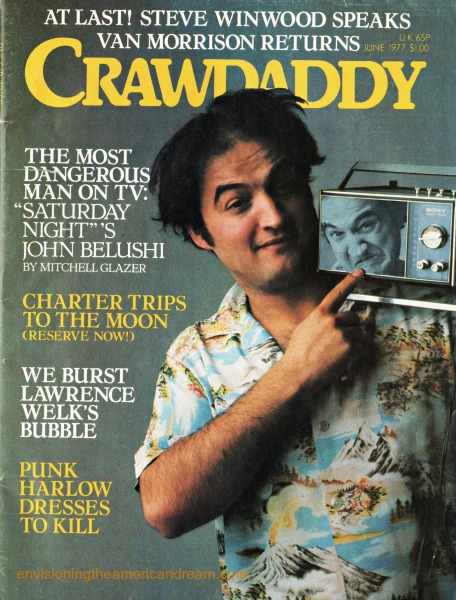
Cover of Crawdaddy Magazine June 1977 “The Most Dangerous Man on TV: Saturday Nights John Belushi” cover photo Albert Rizzo. Crawdaddy Magazine was founded in 1966 just as American counterculture was poised to explode, it was the first magazine to take rock and roll seriously. Preceding Rolling Stone it was regarded as the pioneer of rock journalism. The magazine was known for its well-written insightful profiles of musicians, filmmakers, politicians, comedians, and celebrities prominent in ’70s pop culture.
On a Saturday night filled with the canned laughter of classic comedies like The Jeffersons, Mary Tyler Moore, Bob Newhart, and Carol Burnett, the October 11 appearance of a live broadcast with irreverent humor and progressive politics was, well…. startling.
This is The Big One!
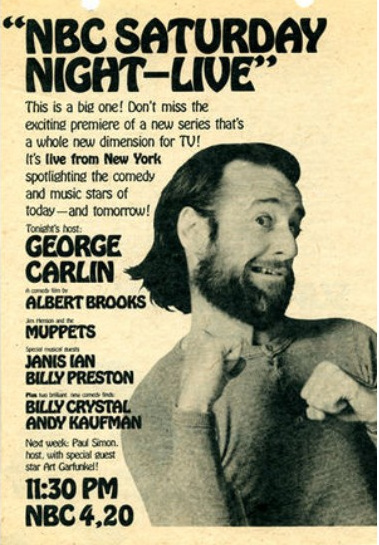
The ad in TV Guide announced “This is a big one! Don’t miss the exciting premiere of a new series that’s a whole new dimension for TV! It’s live from New York spotlighting the comedy and music stars of today and tomorrow!”
Was America ready for “The Not Ready For Prime Time Players?”
Saturday Night Live arrived just as I was about to enter adulthood and frankly, I wasn’t sure if I was ready for life’s prime time either.
A Look Back
In honor of SNL’s 50th anniversary special, I recently looked back at an early editorial on the state of television in the mid-1970s, and the impact and future of this groundbreaking TV show.
Published in Crawdaddy Magazine in 1977, it was written by editor Peter Knobler.
If you were relevant to pop culture in the 1970s you were featured in Crawdaddy Magazine so it’s no surprise that amongst ads for Hitachi stereo receivers, Yamaha guitar amps, and Bonnie Raitt reviews, they would feature John Belushi on one of their covers for a story entitled “The Most Dangerous Man of Television.”
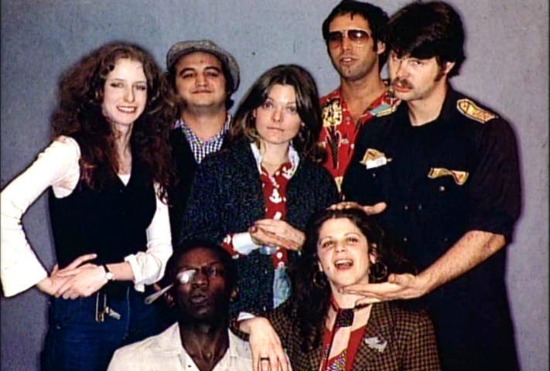
The Not Ready For Prime Time Players – cast of Saturday Night’s first season. Note that in the following editorial, the show is called Saturday Night. In 1975 when it debuted, ABC had a show called Saturday Night Live with Howard Cosell, so it wasn’t until 1977 when Cosell’s show was cancelled that the name was changed to Saturday Night Live.
Crawdaddy Editorial June 1977:
Lorne Michaels, producer of Saturday Night once said “I want to make this show bigger than the Beatles.”
It’s not out of the question.
Saturday Night is watched by some 10 million people three weeks a month. That’s 30 platinum albums every 4 weeks. Performers lust after a spot on the show because it sells their records. The TV medium itself is obviously powerful ; both Neil Diamond’s and Barry Manilow’s catalog of albums reappeared on the charts after their network specials were aired.
Whether one show can have the vast and sustained impact of the Beatles can be debated but were talking millions and millions of man hours here.
Perhaps it can be put to good use.
Commercial television is bound to the fears of its advertisers. Never has any network producer or show completely convinced a substantial section of the advertising community that good television pays.
Through the years there have been good shows for people our age (what advertisers call the 18-34 year old age bracket)-The Smothers Brothers Comedy Hour, Star Trek, The Twilight Zone – but the dollars weren’t right and nobody followed their lead.
Now as the 18-34s increasingly dominate the dollar flow, there’s more leverage.
Rock n’ Roll has become mainstream, performers are “crossing over” into what had been termed legitimate celebritydom- the power of the market has been proved. 18-34’s support magazines, industries ( music, cosmetics, apparel); we set trends, establish the mode of living which is ultimately merchandized to the country at large.
There’s no reason there can’t be some decent TV; popular taste supports it.
Saturday Night is good, slightly bent, mainstream humor played with enthusiasm and the requisite edge of lunacy.
And it’s successful- a recent Neilson study reported that of the 100 Neilson Families watching TV at that time, 87 sets were tuned in to Saturday Night. The portion of the population is sizable, its influence is far-ranging, its buying power substantiated.
What more is necessary to prove that “good”- that is, reasonably intelligent, fairly progressive, moderately informed…good!- programming is worth airing? The TV habit has been cultivated and secured.
Good TV will make money.
When the advertisers finally pick up on that fact, interests will no doubt have changed. Up to now there have been rotten, if successful programs pitched to the young folk- Happy Days, Laverne and Shirley – and some better shows aimed at a slightly older audience ( Mary Tyler More, Rhoda, All in the Family).
But programming which zeros in on the 18-34 sensibility- rock and roll, progressive politics, irreverent humor, real as opposed to cosmeticized people in life situations recognizable to this particular audience ( for example a completely casual acceptance of a couple living together or people smoking dope)- simply has not been produced.
Will tube time be forever out of sync?
Here’s hoping that Saturday Night doesn’t remain in a class by itself.
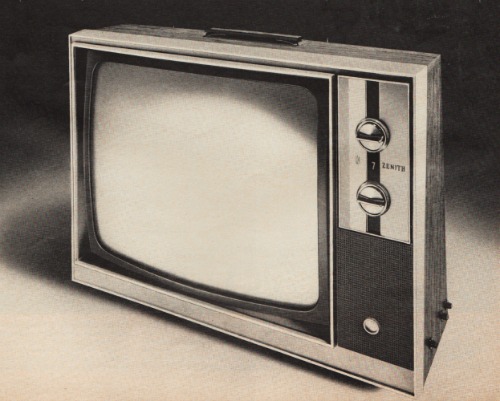
Fifty years later, did SNL become as big as the Beatles as Lorne Micheals hoped it would become? Some may argue the point …but no one would argue their impact – SNL spawned an entire TV generation of irreverence.
Copyright (©) 2025 Sally Edelstein All Rights Reserved
You Might Also Enjoy
It’s a Mad, Mad, Mad, Magazine World



 Envisioning The American Dream