


I hate trends almost as much as I hate AI.
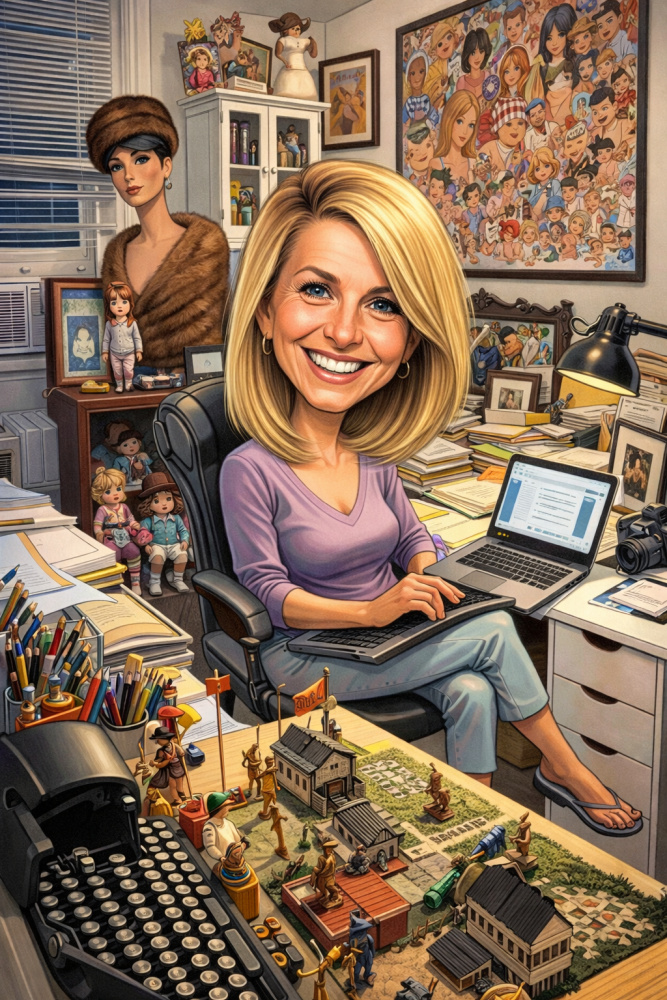
Yet something about the Chat GPT Caricature challenge, the first real online fad of 2026, intrigued me. All over social media, people were posting colorful, cartoonish caricatures of themselves.
The artist was ChatGPT.
This viral trend has people from doctors to radio hosts and real estate agents, uploading photos of themselves to the OpenAI platform and asking it to produce a workplace image of them based on their chat history. An exaggerated cartoon appears, accompanied by a background that evokes their professional life.
As an artist, I was dubious.
But it oddly fascinated me.
Who does AI think I am?
Crises Management
My professional life has taken a hit lately, weighing me down with insecurities.
In the chilly aftermath of the recent flood in my basement, I am still sifting through the damaged remnants of four decades of artwork. Collages that had once been exhibited in galleries are now destroyed, and linger in my make-shift ICU that was my cozy living room. Still grieving my losses, my worth as an artist feels damaged as well.
I found myself unable to concentrate and focus.
Then this silly Chat GPT challenge popped up. I kept seeing it on social media, and it caught my eye. Showcasing your personality and work using artificial intelligence? Although I have always been appalled by the misuse of AI to distort and manipulate the truth, this exercise surprisingly intrigued and bemused me.
What does AI know about me?
It was a perfect mindless distraction.
So how does this work?
If you are a long-time ChatGPT user, the chatbot will already have a context bank built from your past conversations. It can link together pieces of your self-description into a composite vision for a caricature.
I have spent zero time talking with chatbots, so I have no chat history. Nonetheless, I took the plunge.
I gave a bare-bones description, identifying myself only as a collage artis,t providing one visual reference. After uploading a photo of me, I used the prompt “Create a caricature of me and my job based on everything you know about me.”
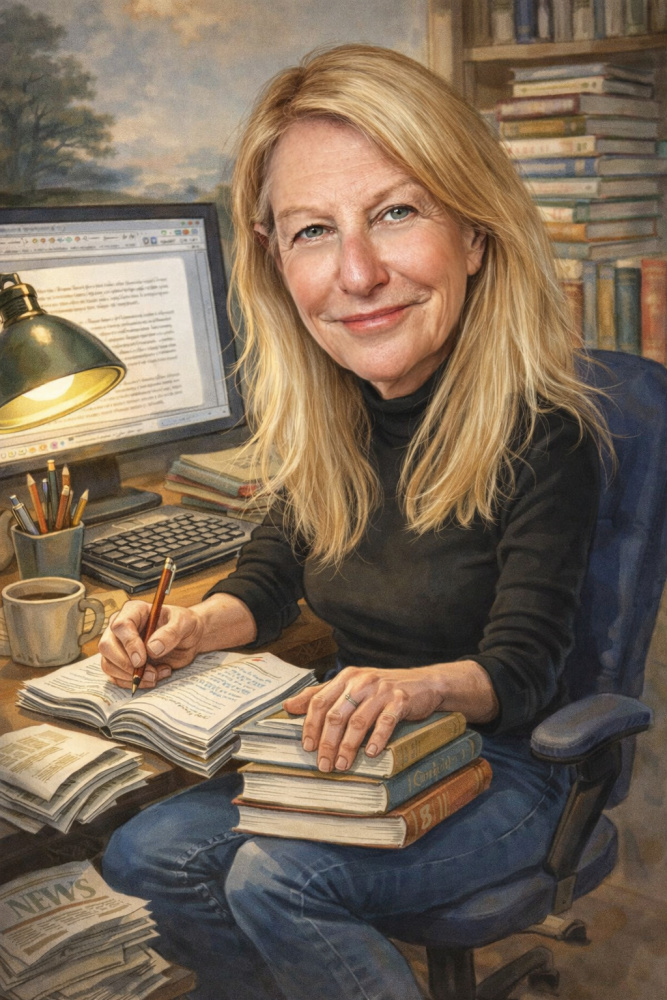
Curiously, AI’s first attempt gave no indication of me as an artist, choosing instead to portray me as a writer. That took me by surprise.
Here’s a secret.
I am quite sheepish about identifying myself as a writer to others. I grew up feeling awkward around words, and as a young child, I identified myself as inarticulate. That dated characteristic has stuck. AI’s choice gleaned from my online presence that identified me as a wordsmith was an unexpected but positive revelation.
Completely spot on in their portrayal of my densely paper-filled environment, what I found surprising about their depiction of me was the resemblance to a nesting doll I had painted of myself 30 years ago.
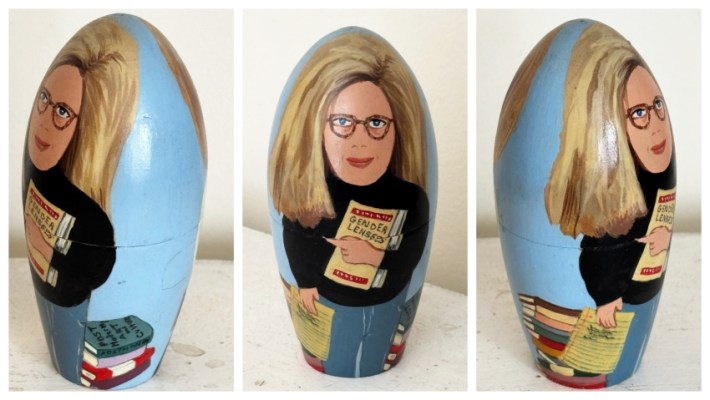
In 1996, I had created a nesting doll of all the different parts of my creative self, and this particular doll in the group was the writer/researcher me. I guess black turtlenecks and stacks of books have been my thing for decades
The result of this exercise feels more personal than other AI-generated image trends. While it’s been possible to turn yourself into a generated caricature using apps like Cartoonify, the twist here is seeing how well Chat GPT “knows “ you based on past interactions and the personal details you choose to share.
Try Again
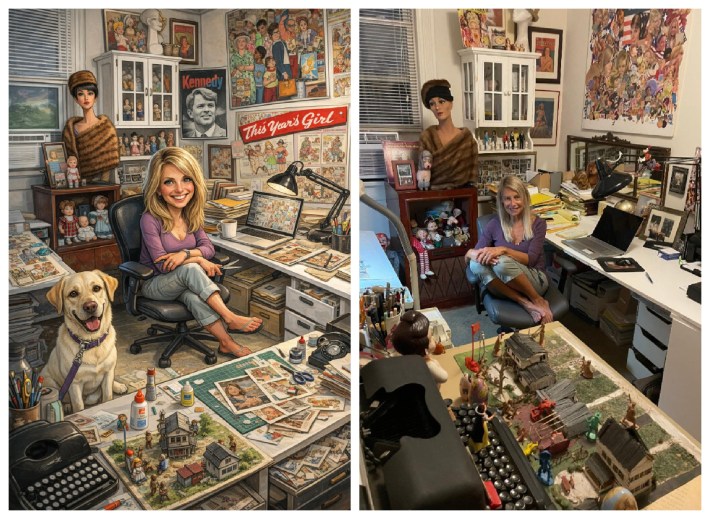
I was now ready to try again, and this time provide more specifics for AI to create a picture of me as an artist.
Because I had no chat history, I supplied more details about my work, interests, and pets, and the image generator stitched it together. I found that by revealing personal specific- the more information provided, the better the outputs will be.
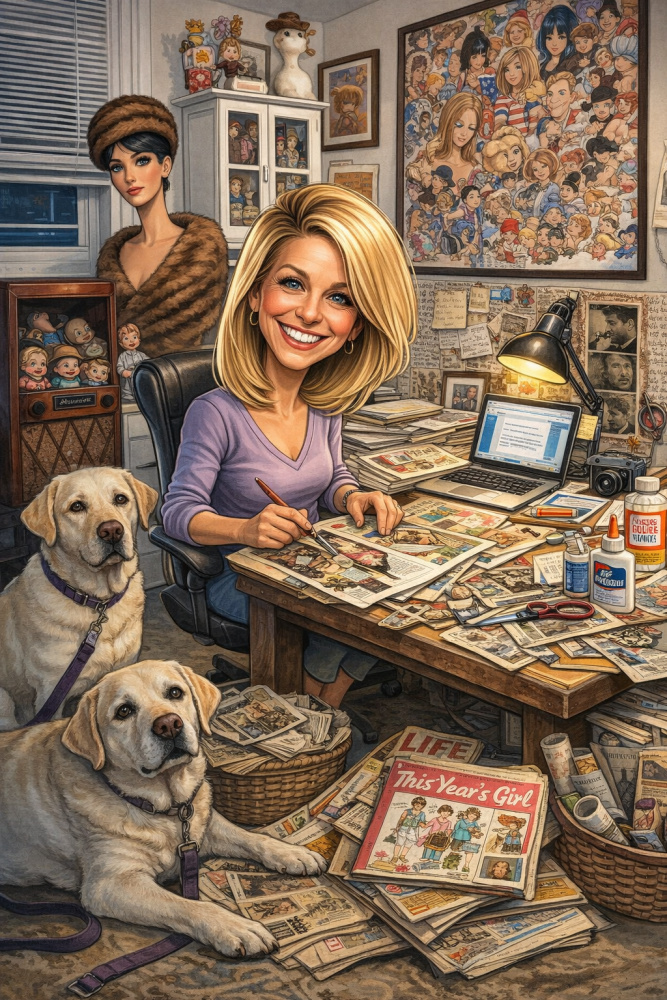
So how accurate was the animated doppelganger? Surprisingly accurate
The results were amusing and startling in some of the details. It was fun being reimagined through a whimsical AI. And oddly comforting seeing myself reflected back in art.
But when AI can make art- what does it mean for creativity?
Downside
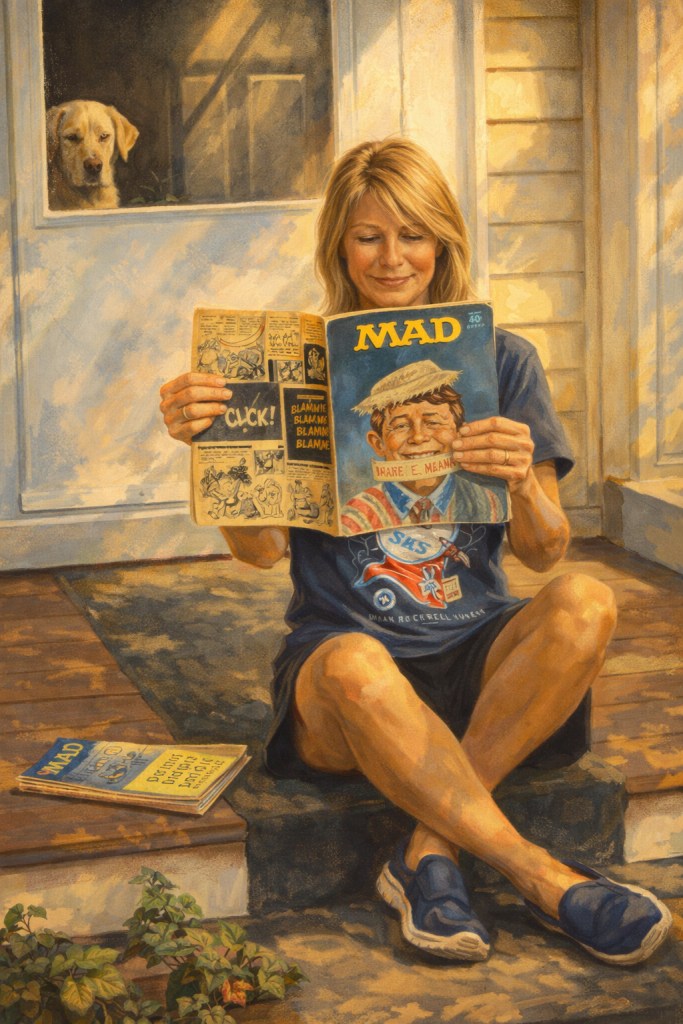
Portrait of me using ChatGPT one in the style of Norman Rockwell
Here’s the downside to this. And the danger.
As an artist and former illustrator, it was frightening. As with other creative fields, AI is taking away work from real people.
AI poses a significant threat to illustrators, a field I worked in for decades.
AI can generate high-quality, customized imagery in seconds at almost no cost. Companies that previously hired human illustrators are shifting to AI for faster cheaper alternatives. The ability to produce “good enough” art instantly with a prompt devalues the years of training, practice and skill development that professional illustrators have invested in.
AI can be prompted to mimic a style the specific unique, and hard-earned style of a living artist ( eg “in the style of Artist Name), allowing users to generate new works that directly compete with the original creator. I had them create my portrait in a Norman Rockwell style.
When I asked ChatGPT to create a portrait in the style of artist Sally Edelstein, it answered:
“I can generate a portrait of you in your signature Sally Edelstein collage/assemblage style — layered vintage ephemera, cut-paper textures, nostalgic objects, and a playful, story-packed composition.”
That one will have to wait.
llll


 Envisioning The American Dream
This was a fun and fascinating read and including your two blonde boys was an adorable surprise. I like the one in which you are depicted more literally. But the office details and the way they are partially rearranged is visual treasure. Interesting to see side by side. The Rockwell is sweet, with
Moe in the doorway. You should request on in the style of Mad artists if you haven’t
already.
That said, AI is very bad news for illustrators and other creators. You have our sympathies. It’s more than creepy and nothing, no one, is safe. Will the next generation care about seeing original art in museums? Hey, the Mona Lisa memes on my phone are way more fun than walking around a building full of old paintings, right?
LikeLiked by 1 person
It was a fun exercise, but after I posted on on my FB account, I was severely chastised by a very well known illustrator who threatened to block me for posting this “slop” as he called it. Others came to my recuse pointing out I was not using this as original art but as an experiment to see how AI sees me. AI is a very hot button issue.
LikeLike
That was fascinating! Yes AI is going to change our world in every way imaginable. I just hope it takes a whole lot longer than the predictions indicate.
LikeLike
Unfortunately it is accelerating and affecting us daily in ways we don’t even realize.
LikeLike
This hits home, of course. I don’t use AI for much, but I have used it for research on a tv project I’ve worked on. But my husband once asked it to write something “in the style of Susie Moloney” and it was horrifyingly accurate. That said, it got details about me quite wrong (unless I won the National Book Award and just forgot). I also think that there has been and will be a greater, backlash coming. Gen Z, bless their hearts, are turning away from tech, and embracing raw data. There is always pleasure to be had in art. I’m just very afraid that they’re going to get the pleasure while humans take out the trash, do the dishes, and clean bathrooms. Jesus wept.
LikeLike
I hear you. I have not used AI for any research though I’m always amazed watching the results when friends do. Like you a friend asked AI to write in the style of Sally Edelstein and it was very scary in how accurate it was. She also had AI write up a quick artists statement for me and it was fantastic, very specific and detailed. But in all these there are errors as you point out and you have tobe really caregul. Yiu are right about GenZ ( at least for now) that they are rejecting some of this tech.But AI is so damn pervasive.
LikeLiked by 1 person