



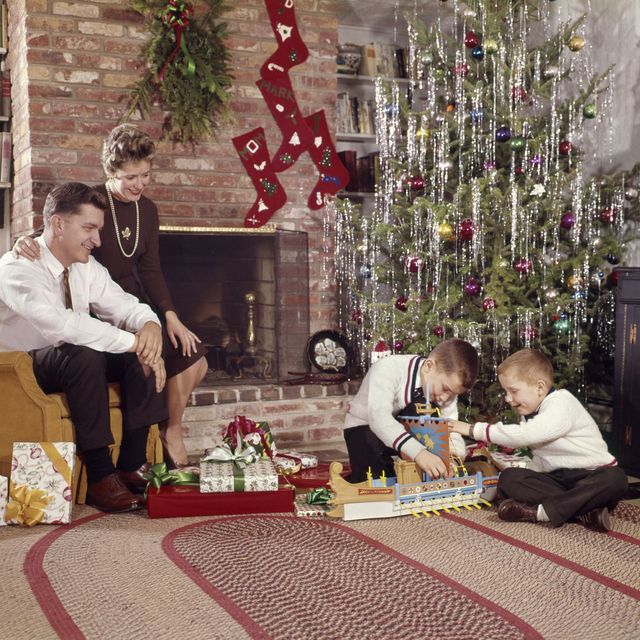
Tinsel is making a big comeback this Christmas, but it never really left.
Literally.
Ghosts of Christmas Past seem to appear in the most unlikely places.
While recently sorting through some dusty old Buster Brown shoe boxes filled with fading pink Spalding balls, metal skate keys, plastic Ratfinks, and tiny Disneykin figurines, glittering strands of decades-old silver tinsel were tangled among the toys.
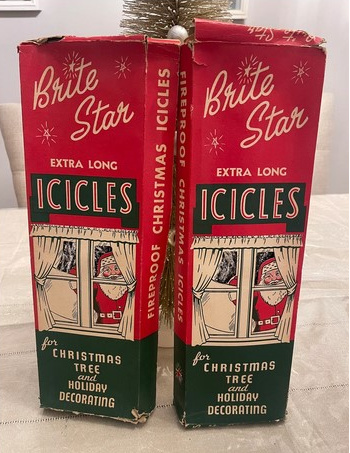
1950’s Tinsel Icicles
Old Christmas memories never die and neither does mid-century tinsel. This stuff stuck to childhood Angora sweaters, corduroy, and made its way back home with me on the bottom of rubber-soled saddle shoes as we trimmed the Christmas tree in our elementary school classroom. The crinkly, tinsel icicles were placed with great care and pride and could take hours.
That stringy shiny silvery stuff usually gotten at Woolworths had a way of hanging around long after the holiday, hiding in shag carpets for decades.
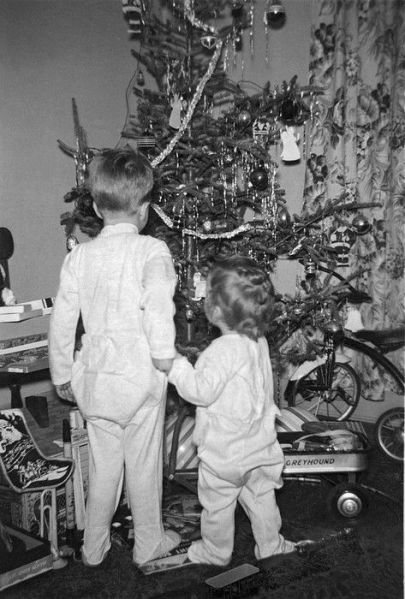
It’s no surprise that the tinsel of our youth had a long shelf life.
Like the celadon green painted walls of our elementary school classroom, the tinsel we decorated our Christmas trees with was made of lead.
Ho! Ho! Ho!
For way over half a century, lead foil was the perfect material for this ubiquitous silvery Christmas decoration. Non-flammable, it was not only safe, it was pretty, festive, and cheap.
Tony Tinsel
But its origins are a lot tonier than the Five and Dime store flimsy tinsel we think of.
Once upon a time, tinsel was so expensive only the wealthiest families had access to it.
It just didn’t just glitter silver- it was actually made of the metal.
In 17th century Germany, the first Christmas trees were embellished with tinsel made from real silver pressed into strips. Long before electric lights, trees were decorated with real lit candles and the sparkling silver combined with the flickering light created a twinkly effect that worked as a percussor to modern-day string lights.
Copper and Tin
By the early 1900s Christmas traditions imported by German immigrants became mainstream in America and middle-class folks were looking for affordable ways to beautify their evergreens in their living rooms. Silver tinsel was too dear for most people’s pocketbooks. Manufacturers began making tinsel out of copper, tin, and aluminum. They produced the same sparkle as silver but for a fraction of the price and became very popular.
They could be used year after year and lovingly packed away with ornaments. Unfortunately, the aluminum paper in tinsel was very flammable.
WWI Tinsel Goes to War
When WWI broke out in 1914, tin was in short supply, and copper production was reserved for war efforts.
Tinsel quickly disappeared from holiday displays.
Lead takes the Lead
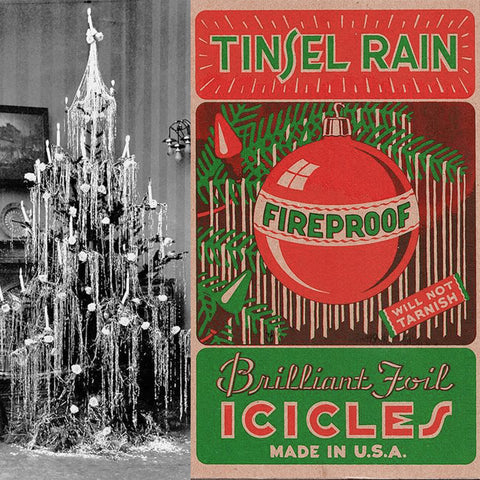
Manufacturers were still trying to figure out the perfect tinsel. This was a beloved holiday decoration. They needed to come up with the right material to use. The obvious choice was lead. Valued in paints and children’s toys, what better metal for Christmas cheer.
By the 1920s lead-foil tinsel exploded in popularity and became mass-produced. Lead-based tinsel was a hit and the gold standard for tinsel production for decades.
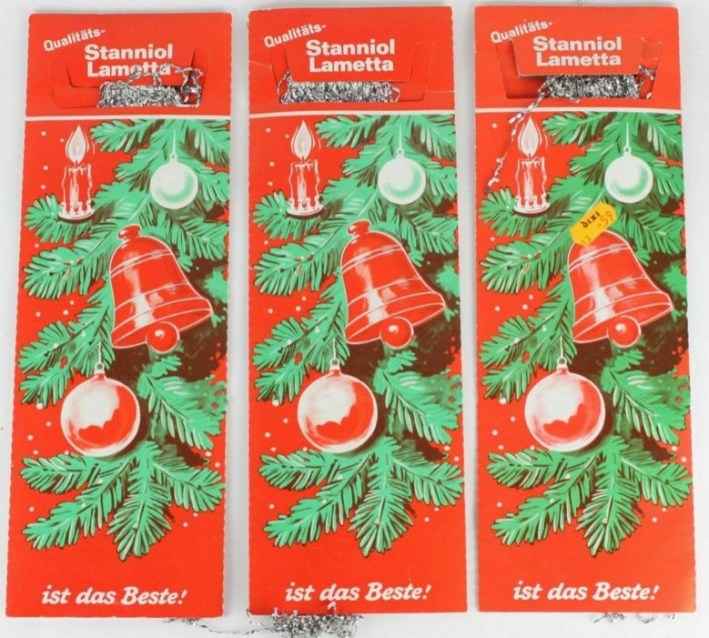
A German Co became the face of tinsel with Stanniol Lamella which translates into tiny blade
Lead revived tinsel from obscurity and soon it was embraced as a standard Christmas component along with ornaments and electric lights.
A 1959 newspaper article on holiday safety pointed out: “Tinsel is fairly safe because even if kiddies decide to swallow it will not cause poisoning.”
By the 1960s scientists began to question the safety of lead.
Tinsel was not fairly safe.
Awareness of the risks of lead poisoning would spell the end for lead-based tinsel. Ingested or absorbed through the skin it causes headaches, vomiting, and even brain and kidney damage.
The FDA got involved. They reached an agreement with tinsel importers and manufacturers, putting an end to lead tinsel in the U.S. in 1972. The 1972 change was at first kept secret, Popular Science reports, for fear “that many people preferring the lead variety would stockpile it,” an official said at the time.
Today’s trendy tinsel is made of safer polyvinyl chloride, shredded shiny ribbons of plastic.
PVC tinsel won’t poison the family.
It will just ultimately poison the earth.
Merry Christmas!




 Envisioning The American Dream
We grew up with the probably-toxic version and I probably have an unopened package or two from the 50s or 60s or so in with the rest of history. It was very very not-cat-friendly too, as well as being envrionmentally dubious, so we don’t buy or use it now. There were certainly times when it had its charm for me though, long long ago–
Happy holidays to all, including cats and the earth!
LikeLike
It was certainly not great for cats who I can imagine getting all tangled up in it. Same for dogs. But its so nostalgic and such a part of our youth, and just joined the list of so much that we learned was really not that great for us. A very happy holiday to you,to cats, dogs, hamsters and people too! And desperate wish for peace on Earth.
LikeLiked by 1 person
The cats tried to eat it, as I recall, which is bad. It is indeed so nostalgic and memorable to me==it seems there were fewer ‘things’ in my life, and I valued them more. Now I have tons of crap, much that I hope to give away to those who might enjoy and appreciate them, but few people seem to appreciate the little goodies (most not worth real money) that mean something to me–oh well. Best to all–
LikeLike
My home is a literal museum to the little things, the disposable parts of our lives that really are evocative and hold so much meaning but may or may not have any monetary value. I suspect my heirs will toss them all in the dumpster.
LikeLiked by 1 person
Mine too, and I have no real heirs as in children or devoted younger people likely to outlive me. Our family did not breed much, and those that did are almost entirely unknown to me–fell out of touch for no real reason, so they are unlikely to scoop any pot I may have–but I still hope like=minded folks might want something I have to give away.
LikeLiked by 1 person
Same here. I have no children either, and though I have a niece and nephew, they have zero interest. For now. Its a good thing I’ll be dead because the thought of all my stuff being discarded would kill me!
LikeLiked by 1 person
I tend to believe that we might continue after death in some sort of energy form, so it’s incentive for me to try to clean things up and move them to those who care so my ghosty bits don’t have to see what might happen!
LikeLiked by 1 person
I understand, deeply.
LikeLiked by 1 person