


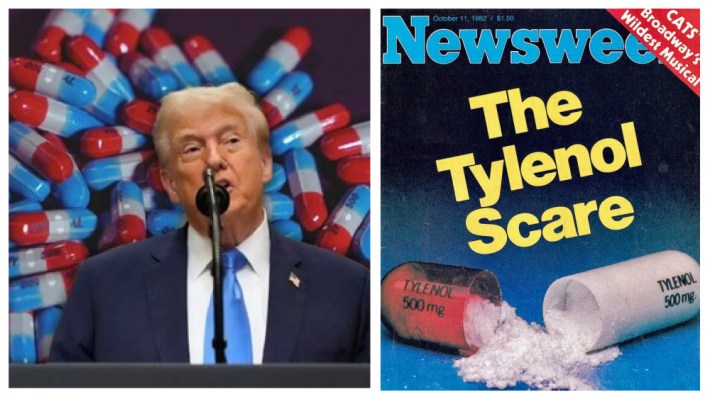
The Tylenol Terrorist is back!
Until now, the biggest scare with Tylenol happened forty-three years ago this week, setting in motion a widespread panic.
The 1982 Tylenol murders rocked the nation.
It was the biggest story of the year when it was found that someone had tampered with the popular pain medicine. Within a span of a few days in late September, seven people in the Chicago area mysteriously died. The victims ranged in age from 12 to 35.
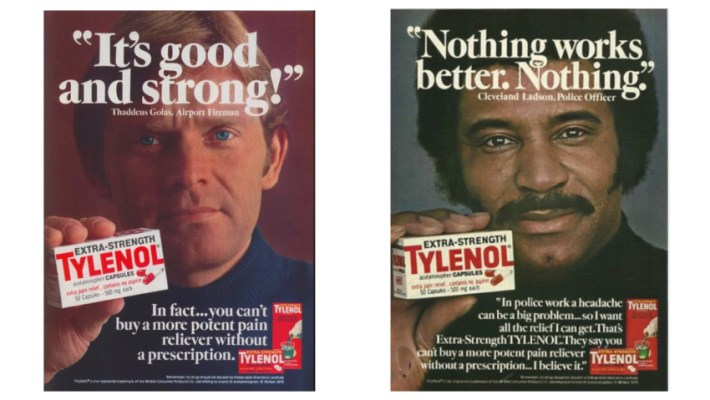
The Tylenol crisis of 1982 involved the product tampering of Extra-Strength Tylenol capsules with potassium cyanide in the Chicago metropolitan area, leading to the poisoning deaths of seven people.
The common thread that tied the mysterious deaths shocked the country: They’d all taken Extra Strength Tylenol that had been tampered with. Someone had opened the capsules and replaced the pain-relieving medicine with deadly doses of potassium cyanide.
One of the most common over-the-counter pain relievers had been turned into a murder weapon.
People were terrorized
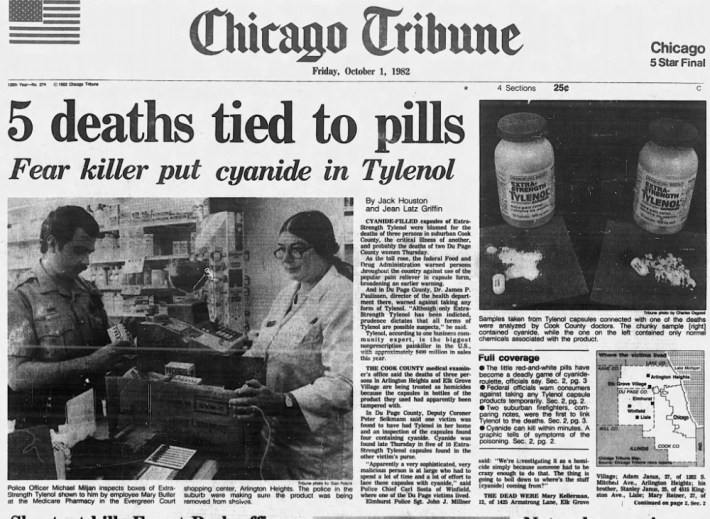
By October 1st, the seven deaths were the top story in every newspaper, and the “Tylenol Terrorist,” as the media dubbed him, was still on the loose.
Spooked
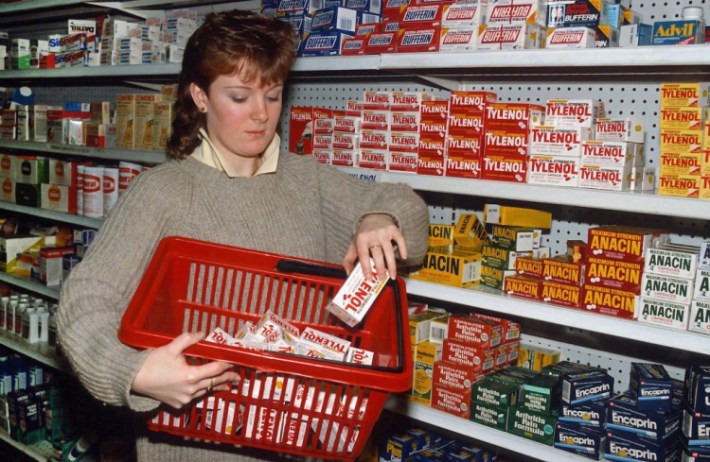
In 1982, Tylenol was the #1 drug at the time. The circulation of these lethal Tylenol capsules sparked a panic across the country and one of the largest criminal investigations in U.S. history.
Overnight the familiar red and white boxes of acetaminophen became a murderous threat and called into question the blind faith many had in the world’s most trusted brands.
Was it a maniacal killer who acted alone or a larger conspiracy and cover-up.
Consumed with anxiety, medicine cabinets were quickly cleared out along with store shelves. The shelves at my local Duane Reade Drugstore in Manhattan were stocked with Halloween decorations and candy but not a bottle or box of Tylenol could be found. We were spooked.
History of Tylenol
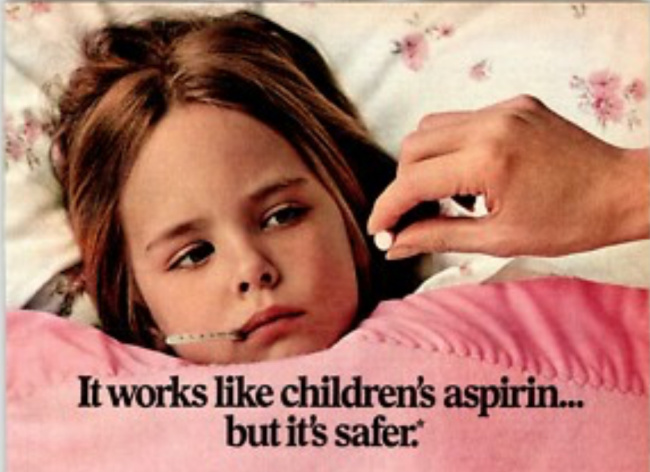
Like me, Tylenol was born in the spring of 1955 and was a boon for the baby boomers.
Seventy years ago, when Philadelphia-based McNeil Laboratories introduced the first pure acetaminophen product to American consumers, Elixir Tylenol, a prescription painkiller and fever treatment for children, my mother sighed in relief.
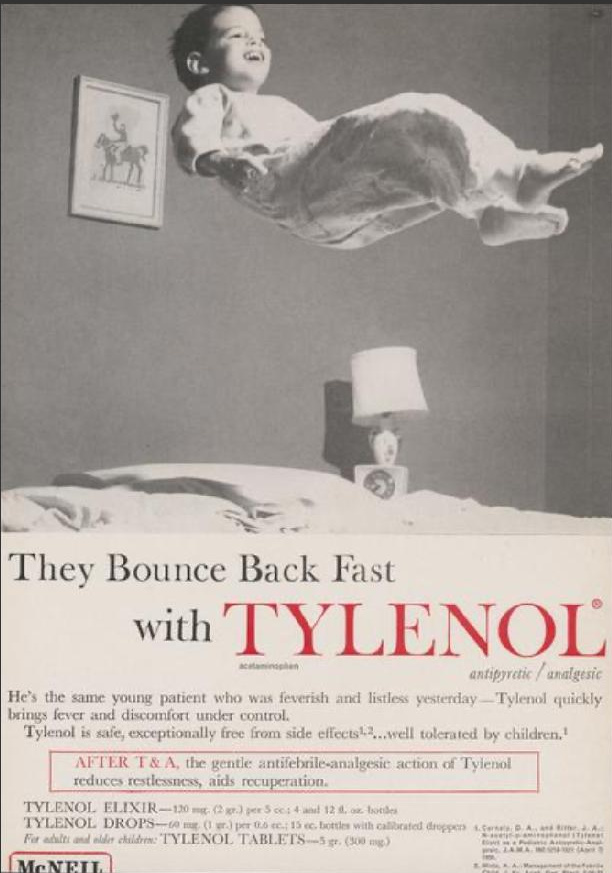
With a 3-year-old toddler prone to tantrums and tummy problems, my older brother Andy was a handful. Giving him aspirin to bring down a fever only aggravated his stomach issues. My mother was beside herself with what to do. Dr Spock’s suggestion of rubbing alcohol on his arms did little to bring down the fever.
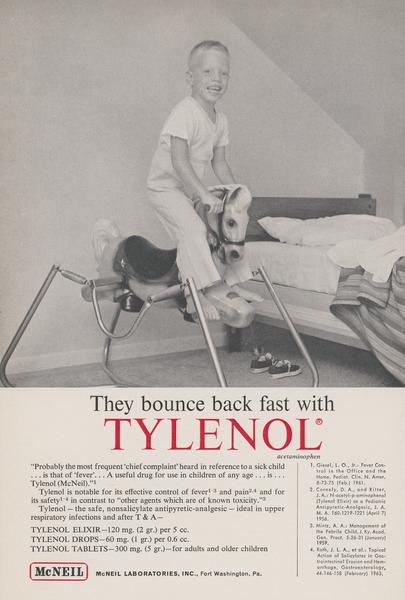
When the pediatrician told her about a brand new prescription product that was easy on tummies and made especially “ for little hotheads,” it was a lifesaver for Mom. The medicine came in a red paper carton shaped like a fire engine, which made it fun for children to look at.
Initially, Tylenol was marketed directly to doctors and pharmacists and required a prescription. Its unique marketing strategy was to inform doctors of the undesirable effects of aspirin and ask them to recommend Tylenol to patients like my brother who were susceptible to these effects.
Its success encouraged McNeil to develop other Tylenol products, and in 1959, Johnson & Johnson acquired McNeil Laboratories.
Before 1975, Tylenol was primarily advertised to doctors and had limited sales. Starting in the mid-1970s, Johnson & Johnson shifted its strategy.
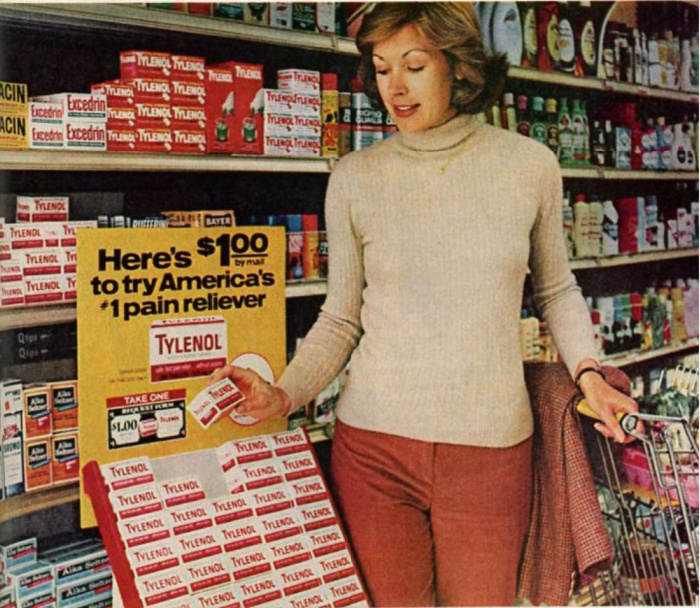
Through an aggressive advertising campaign that focused on selling directly to the public, highlighting its safety compared to aspirin, the brand’s market share grew steadily throughout the decade, allowing it to move from a relatively minor specialty product to the best-selling health aid by the end of the decade, becoming a mass-marketed household name.
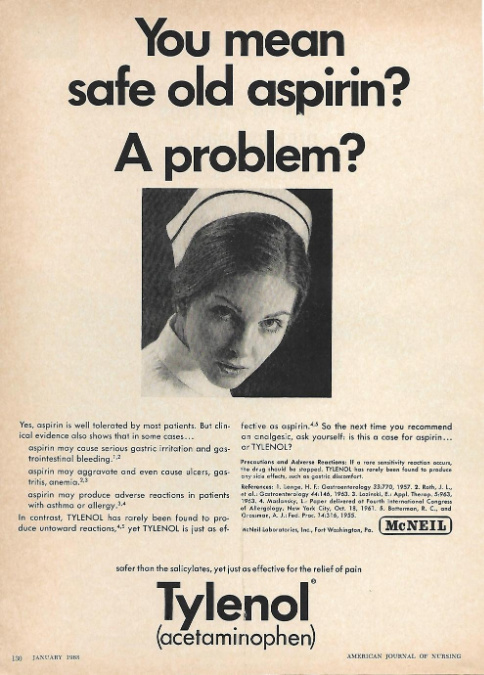
The campaign capitalized on the fact that some people experienced negative side effects from aspirin, a powerful pain reliever with a lower risk of stomach irritation. The strategy worked, and by July 1976, Tylenol had become the number one over-the-counter analgesic in the U.S.
Tylenol’s advertising also featured the claim that it was the pain reliever most used by hospitals, which reinforced its credibility and safety to consumers
Packaging
Before 1982, no one thought twice about opening a bottle of painkillers.
Today, every tamper-proof seal is a reminder of that dark moment when cyanide-laced capsules transformed an everyday medicine into a lethal weapon, permanently reshaping consumer industries.
Before the Tylenol murders, tamper-proof packaging was not standard for over-the-counter drugs. Aspirin and capsules were typically sealed with nothing more than a screw on cap and a wad of cotton.
As a result of the tampering, Tylenol introduced triple-sealed tamper-resistant packaging for Tylenol, which hit the shelves just 43 days after the initial recall. Working with FDA officials, they introduced a new tamper-proof packaging, which included foil seals and other features that made it obvious to a consumer if foul play had transpired. These packaging protections soon became the industry standard for all over-the-counter medications
While the mystery of the poisoner remains unsolved, the crisis led to major public safety and corporate response changes
Within a year, and after an investment of more than $100 million, Tylenol’s sales rebounded to their healthy past, thwarting another “Tylenol Terrorist,” and it became, once again, the nation’s favorite over-the-counter pain reliever.
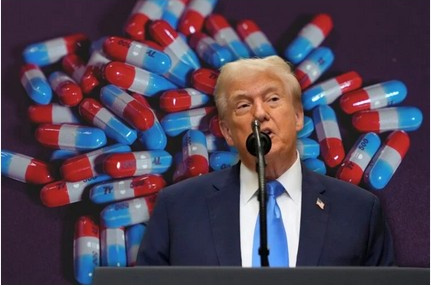
Today, we have our own “Tylenol Terrorist”- Donald Trump, but this time around, he is tampering with the truth, recklessly linking autism to women who took Tylenol during pregnancy. With no science to back up the theory, he is spreading fear in the most irresponsible way about a trusted brand.
Tylenol’s safety is once again coming under scrutiny
Now, if only we could find a tamper-proof seal for Trump’s mouth that dispenses poison, infecting all of us.
© Sally Edelstein and Envisioning The American Dream, 2025. Unauthorized use and/or duplication of this material without express and written permission from this blog’s author and/or owner is strictly prohibited. Excerpts and links may be used, provided that full and clear credit is given to Sally Edelstein and Envisioning The American Dream




What a fascinating history you have created. And timely, too. I know your collection of visuals is vast, but it always is a pleasant and wonderous surprise to see all you come up with. Do you own a Time Machine?
LikeLike