


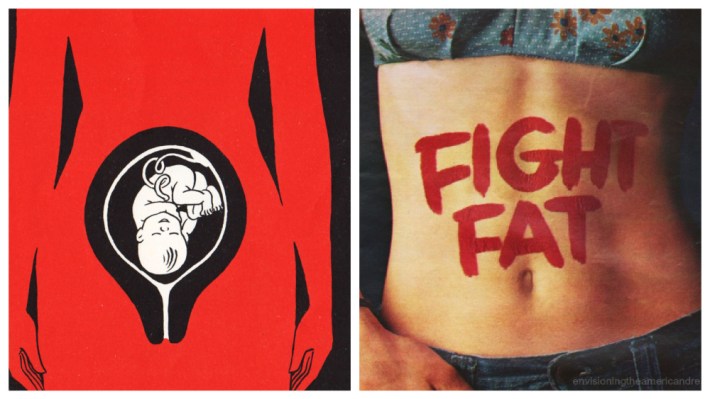
Pregnant women in mid-century America were not spared from the war on women’s bodies and weight control that began shortly after WWII. The constant bombardment of rules and expectations has only increased with each decade.
Following directives from their doctors, women who were “in the family way” had their marching orders.
Lose weight.
A fat mama-to-be meant a fat fetus, and neither was acceptable in an increasingly slender-focused society. This compulsion to thinness is the primordial soup from which our current obsession evolved.
Through osmosis, I became weight-conscious in the womb, and the obsession never stopped.
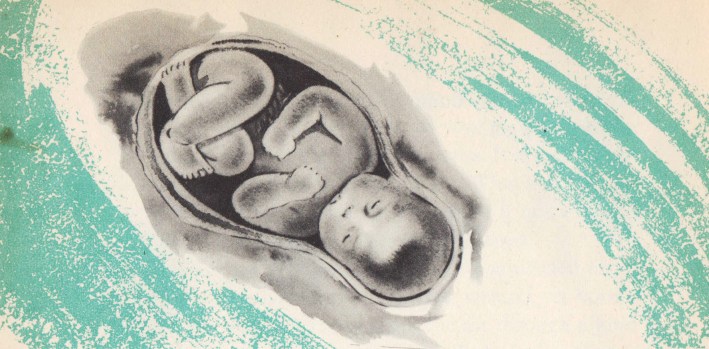
January 1955 ushered in a new year and a new trimester for my mother, Betty.
Before you knew it, I was packin’ on the pounds and so was Mom. Now that I had taken up residency for the past seven months, I felt entitled to squatter’s rights. I was stretching my legs and generally making my presence known, and Mom’s belly tried its best to accommodate me.
Nestled comfortably, entombed in Mom, I sat in at the countless kaffe klatches my mother held for her pals in my parents’ apartment in Far Rockaway, Queens.
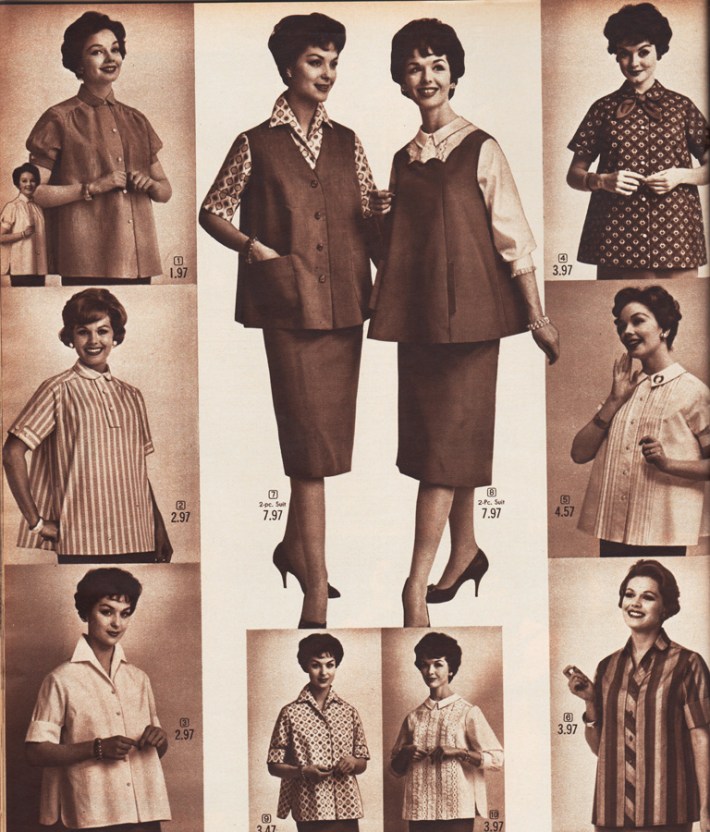
In those days, it seemed there was always bound to be several gals in the group who were “in the family way.” Like the steel industry, mothering was running at close to 100% capacity. American women were top-notch breeders!
My second time, Mom had first-hand knowledge on pregnancy, what to expect when you’re expecting.
Having successfully delivered a whopping four-pounder three years earlier, Mom was a seasoned pro. She was happy to share her experiences with the first-timers. The bourgeoning shape of their bodies was often front and center in conversations.
Gathered around the cheery yellow Formica kitchen dinette set, the nervous first timers, of all shapes and sizes, drew deeply on their cigarettes. Settling into their comfortably padded seats upholstered in mother-of-pearl plastic yellow, they listened intently to what Mom had to say.
Losing Weight- A Piece of Cake -Go Figure
After refilling the coffee cups, Betty gently removed the blackout cake from the green and brown Ebingers box that was sitting on the counter, saving the red and white striped string to put in her junk drawer. No one could slice and box a cake faster than an Ebinger girl, despite the fact that most were in their 70s.
Mom was grateful to her Aunt Irene for bringing it with her on her visit the other day. (even though at the time she chastised her aunt for schlepping a cake all the way from Brooklyn). Otherwise, there wasn’t a stitch of decent cake in the house to serve the girls. And the rich chocolate layer cake, named for the wartime blackouts, filled and frosted with dark fudge and dusted with chocolate cake crumbs, was to die for.
She sliced a piece for each gal, carefully licking the chocolate frosting from the knife.
Her neighbor, Shirley from down the hall, a red-headed extrovert with snapping brown eyes, wagged her plump finger sternly at each one of them: “No matter what, if you only get in the habit of doing one thing,” she told the ballooning girls, pausing to take a bite of cake, “ya gotta weigh yourself every day!”
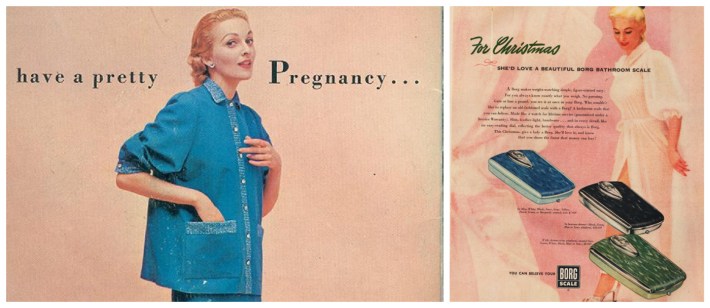
They advised against weight gain to avoid large babies and potential labor complications. Doctors prescribed calorie restricted dieting low in carbohydrates high in protein intended to keep baby small.
The weighing of pregnant women was a critical component of prenatal care. Doctors sternly advised pregnant women to strictly limit weight gain to between 10 and 15 pounds to prevent complications like Toxemia. They had severe diet restrictions as physicians aimed for smaller babies to ensure easier deliveries. Easier for doctors, easier for mothers.
This trend began in 1926, the year Betty was born, and lasted for several decades. Dr. Calvin Hannah, a Dallas obstetrician, started the trend in prenatal care to monitor women’s weight gain and diet to prevent eclampsia, epilepsy, and psychotic diseases.
After that, any dilemma of weight gain in pregnant women was no longer up for questioning among obstetricians.
It was written in stone. It was a shift from the long-held eating for two mentality.
Battle Of The Bulge
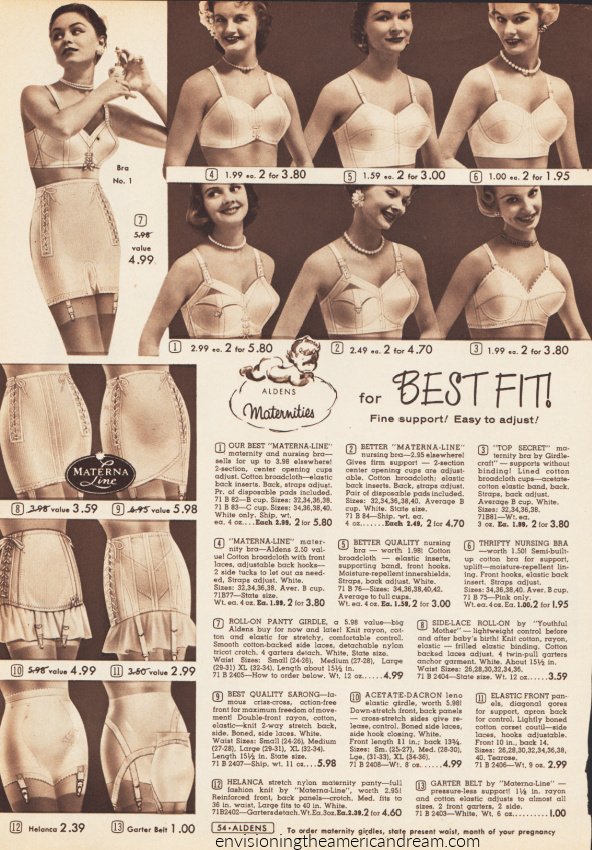
The containment policy was not just a Cold War foreign policy but applied to women and their bodies as well. And a girdle was the reliable soldier in the Battle of the Bulge.
Trying to keep a semblance of their girlish figure as long as they could and balance that extra weight was a real dilemma.
But with the help of a good maternity girdle, Mom assured them, there was no problem. Whatever the activity, my lady- in -waiting mother remained cool and well contained wearing any one of the new lightweight maternity girdles.
“Yes” she read, “the girdle has a place in obstetrics. Its use is almost obligatory for the woman who has been accustomed to wearing a girdle all her adult life.” Holding up one pink latex number, she explained: “This girdle epitomizes the new pretty look in maternity things.”
“The pregnant woman ought to control weight within normal bonds for vanity sake alone” “Pregnancy and Birth: A Book For Expectant Parents” by Alan F Guttmaher.
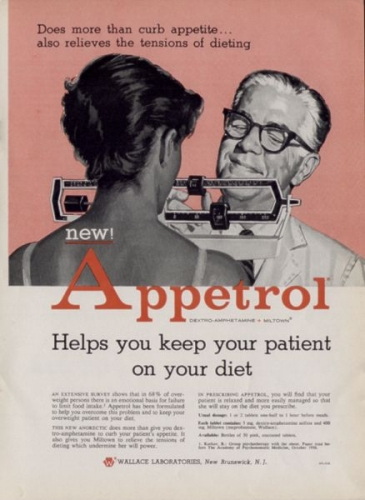
For those gals concerned about gaining weight, Mom could highly recommend her own obstetrician, who would insist on prescribing reducing diets for pregnant women who became ‘overweight” in the course of pregnancy. And if m’ lady was overweight and a wee bit stout to begin with, he might prescribe one of the new wonder drugs that curb the tendency to overeat.
Appetite suppressants helped some women, and small doses of Phenobarbital before meals were indicated for others. Phenmetrazine appeared to be effective and safe in preventing excessive weight gain during pregnancy. And best of all, The Journal of Obstetrics and Gynecology reported that the drug was harmless to the patient.
Of course nothing was mentioned of the affects to baby.
That was the modern, wholesome trend.
Pregnancy Post Script
By the early 1970s, medical research had shown that weight gain did not cause toxemia but was rather a symptom of it.
Of course, the number of pounds permitted to gain were low. Too low. Women today are told to aim for 25-35 pounds.
And it had shown that limiting the caloric intake of pregnant women could have an adverse effect on the fetus, leading to a greater likelihood of prenatal complications. But for pregnant American women in the 1950s and 1960s, weight gain and hearty appetite were no longer sanctioned by the culture, even though biology and Mother Nature had programmed her to experience both.




 Envisioning The American Dream