


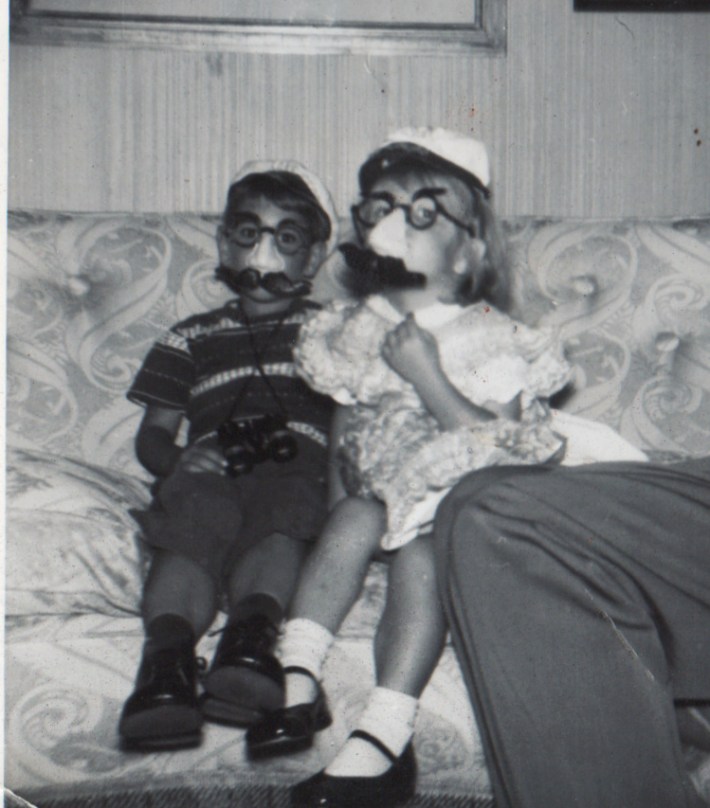
Today is National Siblings Day, and like many, my relationship with my own sibling is strained. We are not estranged per se, but the relationship with my older brother is awkward, void of genuine connection, and filled with decades of disappointments and hurts.
It is not distance that keeps us apart. My only sibling lives less than 10 minutes from my home. It is disinterest and detachment.
But on this holiday, I had another ace in the hole
I have another set of siblings in reserve.
Sort of.
It is a long, twisted story,y and on National Siblings Day, it seems right to share it.
My Mother’s Final Story – The Secret Siblings Who Saved Me
When my mother first told me I had a new sister, I reacted with the exuberance of a lonely seven-year-old only child. I had visions of endless shared activities and deep secrets whispered in the dark of night with this built-in forever best friend. But I wasn’t seven when I learned I had a new sibling. I was 52. And I wasn’t an only child. I had an older brother. And he was abusive.
Long past her childbearing years, my mother, Betty, was 81 when she shared this secret, plus another one. I not only had a sister, but a new brother too. Mom died six months later in 2008.
The previous fall had been a difficult one. Earlier that year her cognitive abilities had begun to diminish as rapidly as her mobility. By late September, after a bad tumble, she ended up in a Long Island rehab.
Every evening, my brother Andy and I made the 40-minute-drive to visit her from our homes in Huntington, N.Y.
Relations with my brother were strained. The dynamics between us had not changed much since we were seven and ten, and the decades of his bullying, anger and selfishness had taken their toll. Friends pointed out that his indifference bordered on cruelty, urging me to disengage from him permanently. But for me, family fidelity trumped everything, including my mental health. Despite his hurtful behavior, he remained very much a part of my life.
My mother’s drab institutional room in the rehab was dimly lit. I sat on the single lumpy bed opposite her to chat while my brother plopped down on the lone Naugahyde chair and hid behind a copy of a crumpled newspaper as was his habit.
After a perfunctory catching up, my mother’s voice shifted into a serious tone. In a clear, even voice, she announced that Andy and I had new siblings. A sister. And then as she toyed with the zipper of her velveteen tracksuit, after a long pause, she added. “There’s a brother, too. Twins.” Two siblings in one quick swoop.
Bemused more than shocked at the improbable and fantastical news, I felt a surprising sense of anticipation and hope. My feelings fragmented as I shifted into a younger, eager part of myself— one who so longed for this. For siblings I could count on.
With a clarity and cogency that had eluded her in recent months, my mother explained her long-hidden alleged secret, seemingly relieved to finally share it with us.
Two years before she married my father, she wanted us to believe that this affluent, urbane young woman had given birth to twins but was forced to give them up for adoption.
In 1954, four years after my parents were married, they moved to a large sunny apartment in Far Rockaway, N.Y., with their precocious two-year-old toddler Andy. Somehow, as though by a miracle, six years later, the twins she had been given up ended up living in the very same oceanfront garden apartment house as my family.
Her eyes widened as she described how she would go downstairs in the building on Seagirt Blvd. to sit with the twins on a park bench overlooking the white sandy beach.
Who brought these children to the park? Who were their adopted parents? That was never clear, and never would be. Had this move to the Wave Crest Apartments been a strategically planned one or just a stroke of luck? Or was this all just in her mind?
Then she dropped another bombshell. My brother and I had met them.
My mind raced, going through the Rolodex in my mind of possible suspects who had appeared throughout my life. A flurry of questions rushed out of me. But she didn’t —or couldn’t —answer them.
My brother and I exchanged looks. While Andy remained skeptical because of Mom’s cognitive impairment, he couldn’t say for certain it wasn’t true. Normally a reserved woman, my mother was so convincing in the detailed telling of this elaborate story, it was hard to believe she had made it up on the spot.
While my brother questioned the story’s veracity, my mind went into overdrive. I immediately envisioned new Passover seders with two new place settings of my grandmother’s Royal Crown Derby bone china to add to my snowy white holiday tablecloth. I could taste the homemade desserts my new sister would bring for Thanksgiving; and feel the strong, protective, reassuring arm around my shoulder from my new big brother.
I trusted my mother’s story with the innocence of a child, because in that moment, emotionally, I was one. The loneliness I felt with my own detached brother made it easy for me to want to believe.
But these new found siblings would reside more in each of our minds than in reality.
Dementia Meets Dissociation
Though my mother had dementia, I have a dissociative disorder. Dissociative disorders are a mental health condition that involves an occasional loss of connection between thoughts, memories, feelings, identity, behavior, and surroundings. Our conditions can both disconnect the line between truth and fiction. But in that imagined space, we were in harmony. Her story met my longing. It was a perfect storm of needs meshing together in each disordered minds. For a few precious months, we both believed. And now a new narrative could be written.
I wanted a sibling do-over.
I understood the logistics of this actually happening seemed far-fetched. When I phoned my father asking if there was a remote possibility the story was true, he laughed knowingly, saying my mother had spoken of the twins years ago. But he dismissed it as nonsense without offering any explanation.
Still, the lure of the siblings was too compelling. And so for several months— even after my mother returned home from rehab—we kept talking about my new siblings at every visit.
Though I never learned either siblings names, I discovered my sister was a doctor. A doctor! Oh, how I had longed for a doctor in the family. My own personal WebMD. More importantly, someone who could help with the practical hands-on care of my aging parents so unlike my hands-off brother.
While my sister was an unmarried, prosperous, successful professional, her twin brother, Mom explained was more of a sad sack.
“A good-natured schnook,” she said through mouthfuls of creamy tuna fish, at the family dining room table.
Never accomplishing much and not very bright, he was, by her account, very sweet.
I’d take sweet. I didn’t need intellect. A schnook was fine by me. I’d even take a schlemiel. It was the opposite of how callous my other brother had been to me.
Plans to meet were vaguely discussed. My mother shared details of phone conversations she supposedly had with them with me. My sister, she assured me, looked forward to meeting me.
And then, just like that, the narrative changed again. One afternoon, as my mother rearranged the framed family pictures on the mahogany breakfront, she casually announced that both siblings had passed away in December.
She didn’t offer an explanation, and I didn’t ask for one.
Like the end of a fairy tale, she might have read me at bedtime, she closed the book. The story was over.
The End.
No one lived happily ever after.
I was crushed.
There would be no boisterous crowded table at Passover, no birthday celebrations with presents to open, and no lengthy phone calls filled with concern and support.
I was left alone with my surly brother and there would be no new siblings to rescue me from this neglectful relationship. There would never be a sibling do over.
The only viable “do-over” would have to be in my expectations of my brother.
A few days before Mom died, she looked up at me from her hospital bed, her thin, blue and white standard issue gown slipping from her shrunken shoulders to reveal an unnervingly bony chest, so unlike the pillowy soft bosom I would lay on for comfort as a child.
With hopeful, Wedgewood blue eyes locked into my teary ones, she asked, “Can I have a do-over?” Those words haunt me still. I knew this was not about a game of golf. This was about her life.
I squeezed those familiar hands with the long tapered fingers that had once held mine tightly while crossing busy streets “Of course,” I whispered.
This secret, lodged in her mind only to leap out 58 years later, was likely constructed to shore up the deteriorating infrastructure of her life and unhappy marriage— one that was faulty from the start.
But for those few months, her secret helped spackle in the cracks of my own fractured mind.
It gave me a glimpse of possibility. It delivered new life— and hope. And maybe that’s exactly why she told it to me.


 Envisioning The American Dream
What an amazing story! Your mom was very special. As her days wound down she touched your heart in many ways, I’m sure. The story of your twin siblings came from somewhere in the depths of her love. She knew you missed out when it came to siblings. She dared to share a dream of a different life.
LikeLiked by 1 person
It was a story that served us both. A story I still hold hope for.
LikeLike
Beautifully written.
LikeLiked by 1 person
Thank you Keith
LikeLike