


Everything about Trump’s tacky, self-indulgent atrocity billed as a Birthday Celebration was vulgar.
The travesty was worse than we imagined. A violent, Vegas-style carousel of greased-up men duking it out Gladiator style on the White House lawn, desecrating sacred ground as the rich and powerful cheered on. An abomination that ended with a vile and racist comment.
All while the average American cannot afford healthcare, gas, and the cost of living.
Imagine a U.S. president using his birthday for the good of the people.
We don’t have to imagine.
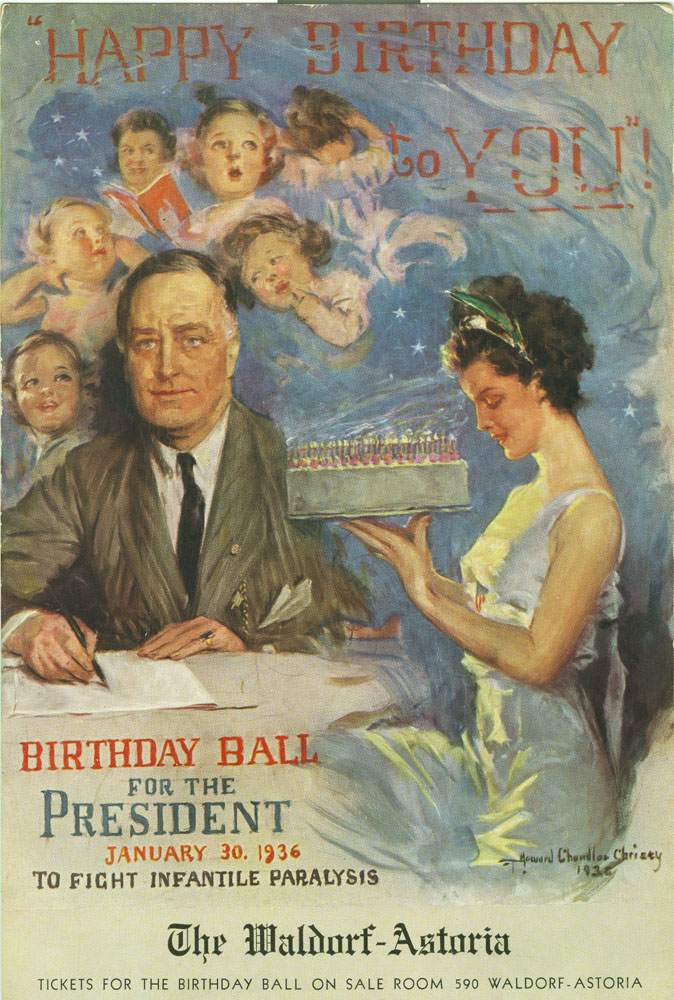
Once upon a time, we had a leader whose birthday celebrations were worthy of an American president. Who used his birthday for a good cause.
For the American people.
Imagine that.
In fact, those celebrations once filled my imagination as a child, fueled by the stories told to me by my grandmother. While other little girls were enchanted by the story of Cinderella and her Ball, I loved hearing my Nana Sadie’s recollection of attending President Franklin Roosevelt’s Birthday Balls at the glamorous Waldorf Astoria Hotel.
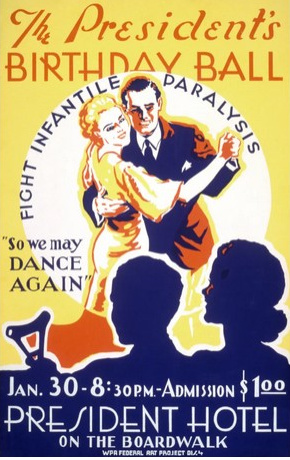
For his entire presidency, FDR turned his birthdays into massive fundraisers. Known as Birthday Balls, these star-studded events were held nationwide to raise money for polio research and treatment at Warm Springs, Georgia. In his honor, they would be held every January 30th, his birthday, in cities and towns across the nation beginning in 1934.
capt
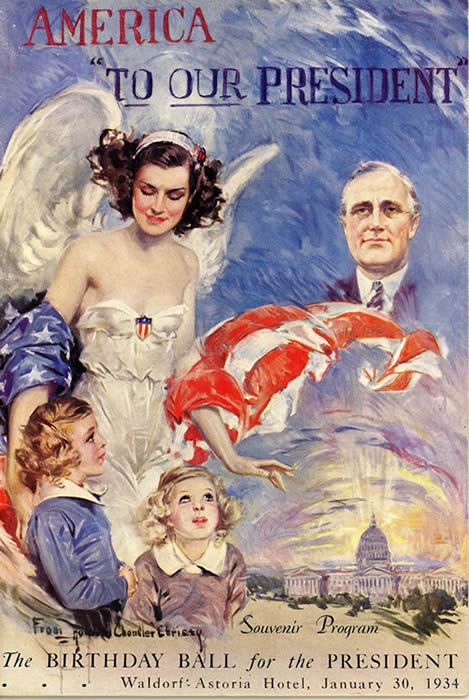
We once had a president who used his birthdays for a good cause. Souvenir Program Waldorf Astoria 1934. Illustration Howard Chandler Christy
That first year of the Birthday Balls, more than 6,000 dances were held around the country, celebrating President Roosevelt’s 52nd birthday.
The tagline for the events? “Dance So That Others May Walk.” And nowhere was the dancing more elegant than at New York’s glamorous Waldorf-Astoria Hotel on Park Avenue, where they danced into the midnight hours for a good cause- to end the scourge of polio.
The dazzling gala drew thousands of sophisticated attendees in white tie and evening gowns, including my grandparents, Sadie and Arthur Joseph.
Unlike Cinderella, no Fairy Godmother was waving a magic wand, bestowing tickets to the ball for this Brooklyn couple.
My grandfather, Arthur, had worked tirelessly on the Roosevelt 1932 Presidential campaign as a fundraiser and was active in the Kings County Democratic organization. By 1934, his dedicated service had earned him not only an invitation to the Inaugural Ball but a place among the thousands who attended the Birthday Ball.
As a child, I loved flipping through my grandmother’s old leather-bound photo album, the thick black paper pages gently crumbling, and the fading photos held in place by black paper corners. One lone snapshot of my grandparents, taken by my mother’s 12-year-old sister Judy, was the only documentation of the Birthday Ball, the description written in silver ink.
The memories lasted longer than any photo.
In the sepia-toned photo, this couple from Crown Heights dressed to the nines looked like the epitome of Café Society.
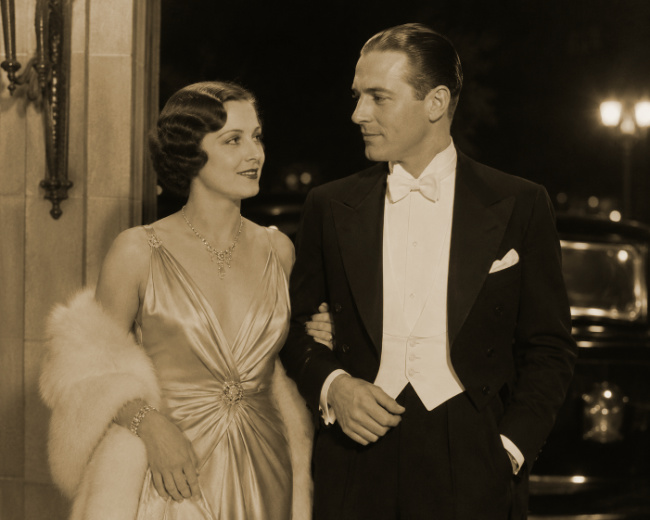
In a dress worthy of Cinderella, my grandmother would describe in detail her outfit for the ball, bringing to life the faded image in the photograph. Purchased at Bonwit Teller for the occasion, the dress was a midnight blue, bias-cut silk satin gown by Mainbocher, trimmed with silver beading. Accented with a long strand of cultured pearls and diamond clip brooches, elbow-length white kidskin gloves, and a silver fox, she sure looked swellegant.
Standing next to her, my grandfather was equally dapper in his Hickey Freeman white tie, with the black wool tailcoat and white pique waistcoat, starched shirt and wing collar, mother-of-pearl studs, white gloves, and black silk top hat.
Taxi Ride
There was no pumpkin turned into a carriage to take them to the ball, but they had reserved a roomy, streamlined taxi for the night to take them across the East River from their Brooklyn home on Montgomery Street to midtown Manhattan.
Lucky for them, because the very next week would see a city-wide taxi riot leading to violence and a strike. Depression weary cab drivers rioted, dragging out passengers, smashing windows, and ripping doors off the cabs.
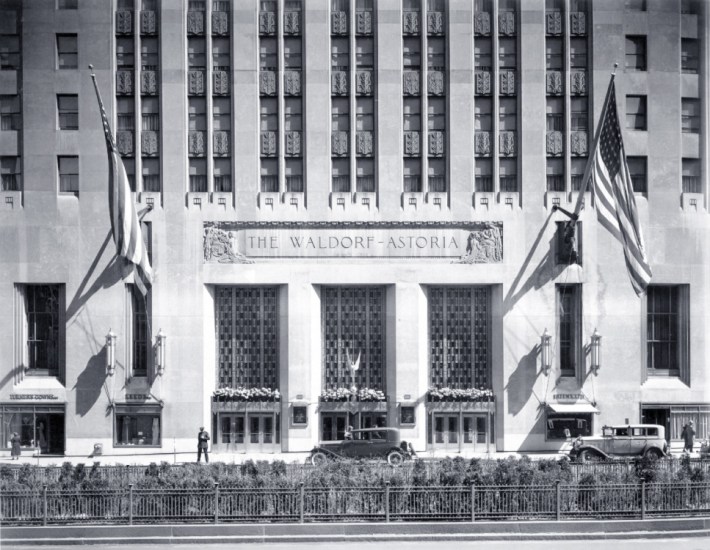
Arriving at the famed hotel, they were greeted by the uniformed doorman beneath the Waldorf’s bronze and glass entrance. The doormen in their iconic military-inspired design of maroon coats paired with gold accents, braided detail, and peaked caps, set the standard for luxury hotels during this era.
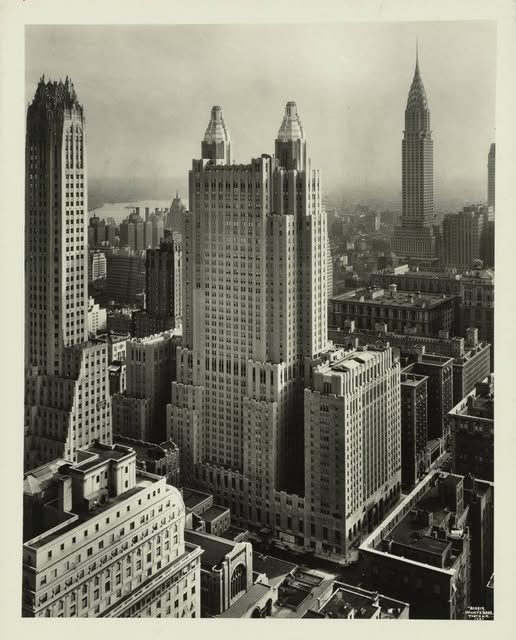
Waldorf Astoria made the 1930s NYC skyline unique
The Art Deco hotel on Park Avenue had only opened in that location three years earlier, in 1931.
The luxurious hotel had originally opened on Fifth Avenue in 1897. When it relocated to its iconic Art Deco home on Park Avenue, it was at the time the largest and tallest hotel in the world. The original Fifth Avenue location was demolished in 1929 to make way for the construction of the Empire State Building, which opened in 1931.
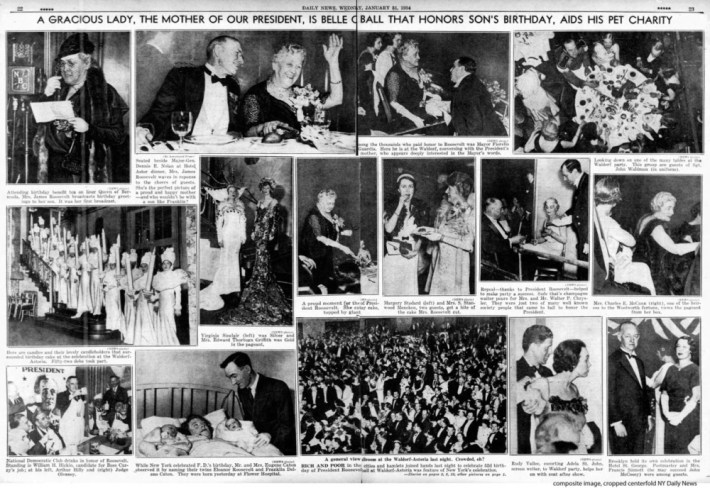
“New York Daily News,” Jan. 31, 1934 Coverage of the FDR Birthday Ball at the Waldorf Astoria
At the star-studded event, the president’s mother, Sara Delano Roosevelt, was the guest of honor, who attended on his behalf. Other luminaries were entertainer Rudy Vallee and Mayor LaGuardia. The champagne and cocktails flowed and could be served legally with the repeal of Prohibition.
A highlight of the evening, my grandmother would gush, was the parading of a five-tiered presidential birthday cake onto the Waldorf Astoria ballroom floor. The confectionery masterpiece was surrounded by fifty-two NYC debutantes, gowned in shimmering white satin and ruffles of white chiffon, wearing birthday cake-shaped hats and carrying two-foot-long white candles “lit by the latest in portable battery gadgets.”
One girl for each year in the President’s life. These young girls were living symbols of a nation’s love and admiration for its president.
On the stage, the girls formed themselves into the shape of a birthday cake, holding the candles straight up over their heads and lighting them from concealed electric batteries.
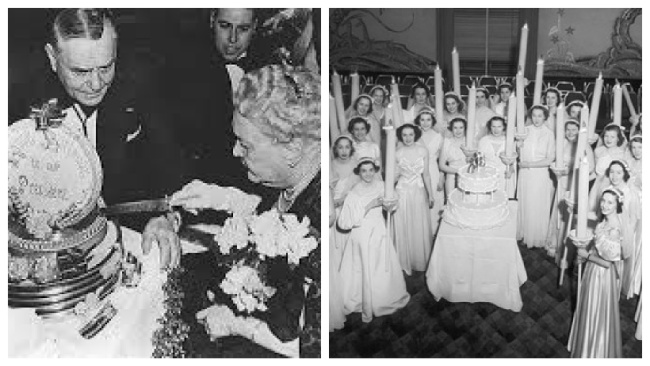
Mrs. Roosevelt ceremoniously cut the birthday cake. The debutantes chanted a happy birthday song, toasts were made, and the candles were auctioned off.
For the main event, Broadway legend George M.Cohan performed a new Roosevelt anthem entitled “The Happiest Birthday I’ve Ever Known” for the thousands of attendees:
“What a lucky day for the U.S.A. / What a man, how he leads the way / What a heart, what a mind, what a plan / What a blessing to the nation, what a man!”
The message of goodwill to the President symbolized what was going on all over the country at the same time.
The first President’s Birthday Ball raised over one million dollars, nationwide, for the cause of infantile paralysis. ( Twenty One million in today’s dollars )
Radio Address
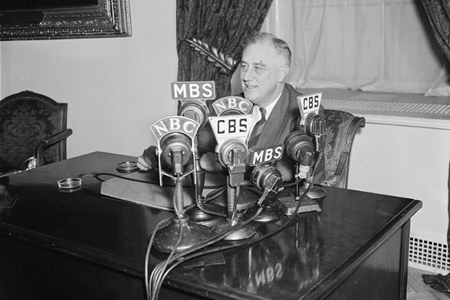
At 11:30, Franklin Roosevelt made a live radio address with a personal message of thanks; a broadcast that would be heard in the auditoriums, ballrooms, halls, and camps hosting the celebrations.
A hush fell over the festivities, my grandmother recalled, at the first sound of Roosevelt’s voice. To the thousands in attendance, their “Mr. President” may have been the absent guest of honor, but this New Deal President was there in spirit, and his radio address was applauded by a receptive and united audience.
Overwhelmed by the outpouring of affection and admiration, he thanked them all for their support and also shared encouragement for the cause so close to his heart.
“Let us well remember that every child and indeed every person who is restored to useful citizenship is an asset to the country and is enabled “to pull his own weight in the boat.” In the long run, by helping this work we are contributing not to charity but to the building up of a sound Nation. . . I am with you all in spirit and in the promotion of this great cause for which we all are crusading.”
He concluded by thanking his vast audience, “but lack the words to tell you how deeply I appreciate what you have done and I bid you good night on what is to me the happiest birthday I have ever known.”
Postscript
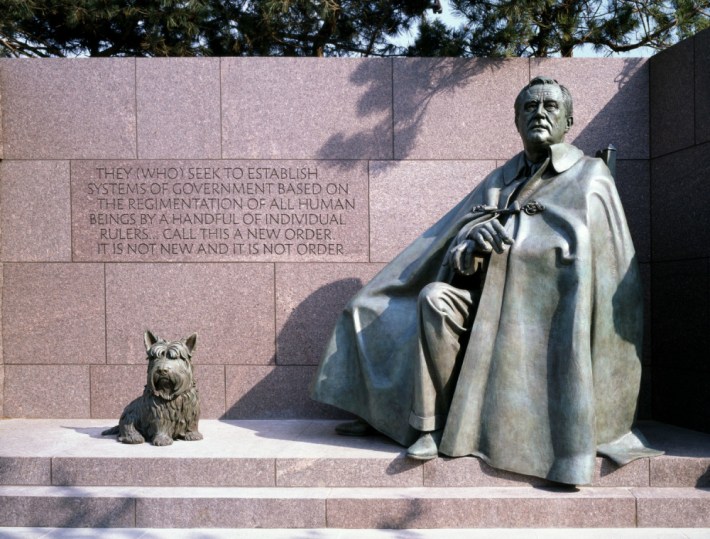
Franklin Delano Memorial in Washington DC with his beloved dog Fala. “What a blessing to the nation, what a man!”
The clock struck midnight, but the magic of Franklin Roosevelt did not end, either for the Ball or for the good works that Roosevelt did for this country. FDR’s legacy has underpinned our modern American social safeguards and economic framework.
They are the foundation of everything that Trump is now taking a wrecking ball to.
The contrast could not be starker.
FDR was a man who assured us, “We have nothing to fear but fear itself.”
Donald Trump does nothing but weaponize fear.



 Envisioning The American Dream
What a beautiful and fascinating history of FDR’s Birthday Balls! Your Aunt Sadie was really something!
LikeLiked by 2 people
Thanks Riva I’m so glad you enjoyed this story.My grandmother Sadie lived a very fascinating life and my families love of history was passed onto me. These Balls are all but forgotten today, and this seemed the perfect time to discuss them.
LikeLike
Trump’s tawdry 2026 birthday will be remembered as coming at the beginning of the end of his presidency. The past few days have been telling. He is falling apart as conspicuously as his policies and his MAGA support.
Your vivid reminder of better days and a much greater leader is truly a breath of fresh air. It is good to revisit an America without the stench of hatred, greed, cronyism and incompetence we’ve been forced to live with.
Thank you, Sally!
LikeLiked by 1 person
Coming on the heels of the magnificent Obama Center Opening yesterday where we were reminded of leaders who were compassionate and intelligent, this was a perfect time to share this story
LikeLike