


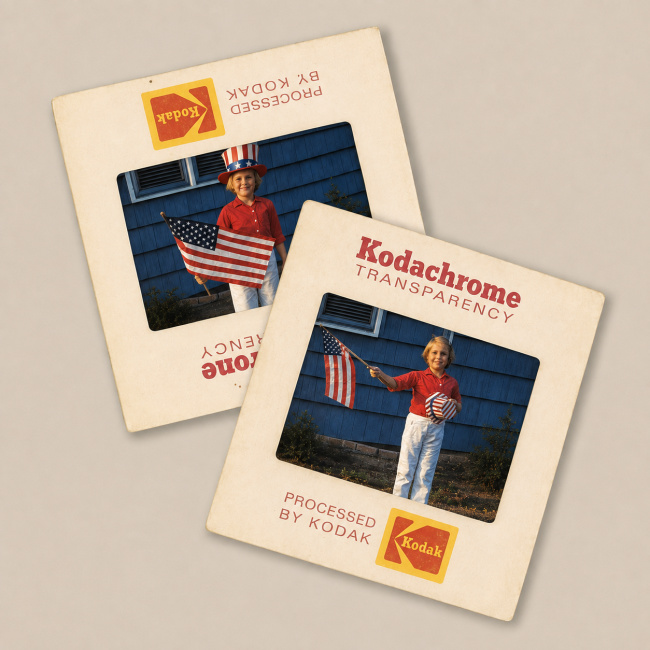
When I was cleaning out my parents’ Long Island home a few years ago in advance of selling the 1955 shingled ranch house I grew up in, long-lost remnants of my otherwise well-documented childhood appeared as though hidden in a vault.
In a cluttered front hall closet nestled in between unopened packages of Sylvania flash cubes and tiny tin cans of Zippo lighter fluid, lined up in a row like soldiers prepared to do battle in barbecues and table lighters, were dozens of yellow cardboard boxes filled with slides.
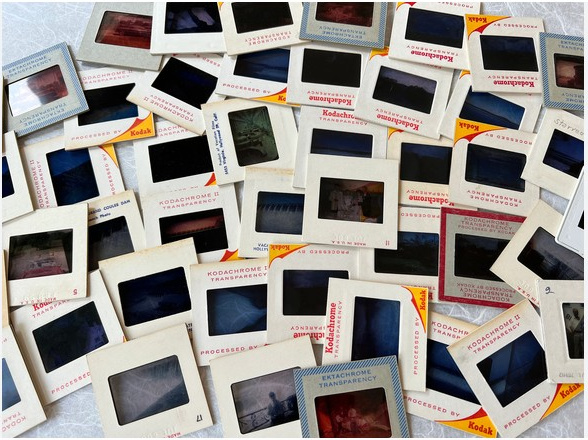
Unlike the hundreds of multi-generational family photos stuffed haphazardly in clasp-closure manila envelopes, faded Welcome Wagon folders, and mounted with black paper corners in worn leatherette albums, all of which I lovingly looked at and committed to memory every time I visited my parents, I had not seen most of these transparencies since High School. The family Kodak Carousel slide projector was long out of commission, and so the slides lay entombed in their boxes for years, dust-free but forgotten.
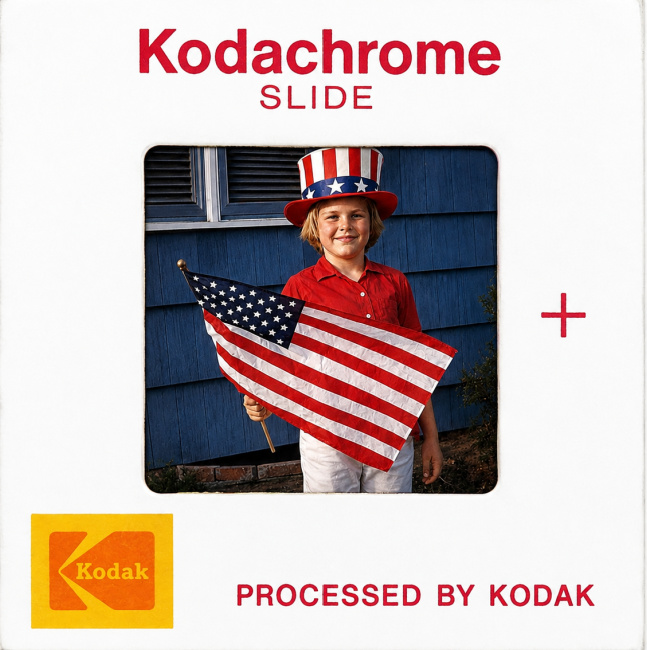
Sally Edelstein, July 4th, 1962
As I held one cardboard slide up to the light of an antique porcelain lamp, I smiled in recognition.
Along with marveling at the deep reds, bright summer greens, and rich blues, so distinctive to Kodachrome, I remembered that flag-waving, earnest little girl decked out in patriotic red, white, and blue, wearing a cardboard Uncle Sam hat courtesy of Woolworths.
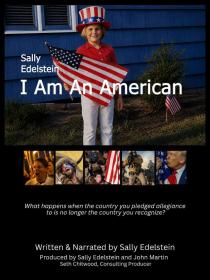
That picture from July 4th, 1962, so emblematic of my patriotic roots, had stayed in my mind long after I viewed it. That image would become the inspiration for the recent film I made, “I Am an American.”
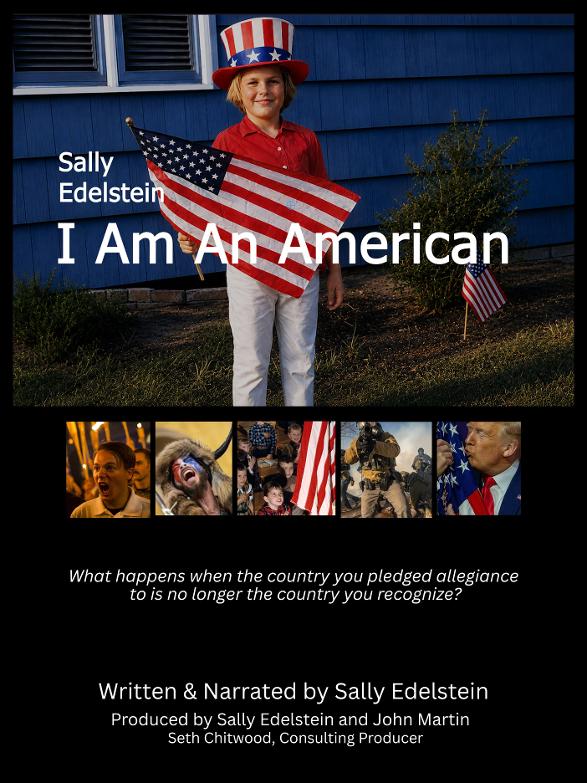
Poster for “I Am An American” 2026
In 2018, when I discovered this slide, Donald Trump had only been in office for sixteen months, and the damage he would inflict on our nation was only just beginning. What I did not know, could not know, was the treacherous path our country was headed.
Now, when I look at this digitalized picture of this flag-waving, red, white, and blue idealistic seven-year-old girl who believed in the inherent goodness of America as she lived out her parents post war American suburban dream, it brings me to tears at the state our country is in.
Though the cardboard slides were long forgotten, the day these two photos were taken in my backyard in front of my bedroom window on Independence Day remained as vivid as the saturated Kodachrome colors of the slide.
The Smell of Democracy in the Air
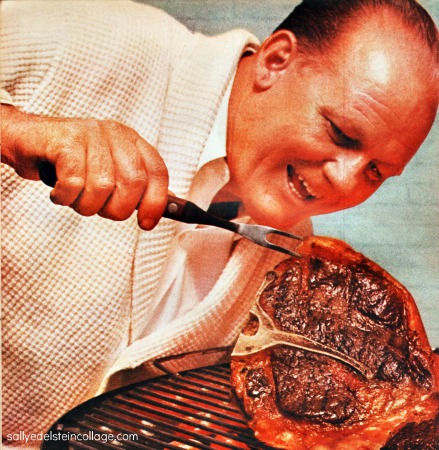
Every July 4th, our suburban development would be shrouded by the smoke of burning charcoal.
The sizzling smell of democracy was in the air. Besides a parade, nothing was more quintessentially American than a July fourth back yard barbecue.
Like some sacred Old Testament tradition of sacrificing an animal to please the Lord, every Independence Day, a burnt offering of seared flesh was offered up in homage to Uncle Sam. In that confident mid-century soaring bull market, Democracy was as vital to our health as a Delmonico steak.
The American Dream was flourishing and in full bloom
Dress For Success American Style
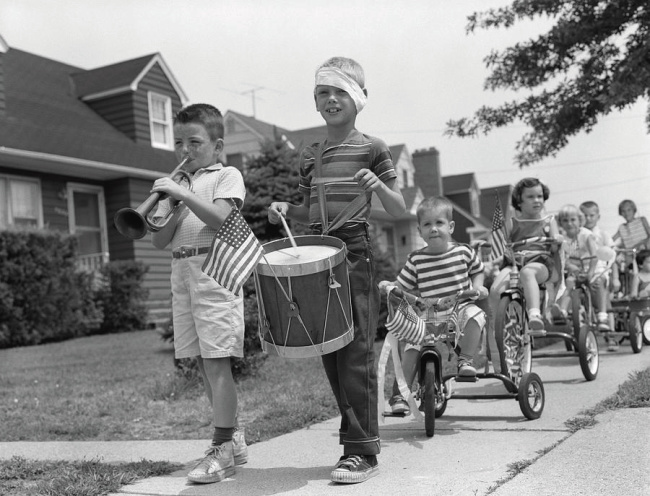
Just as I did every July 4th, I chose my outfit carefully.
This was not a day for zingy playtime colors. No Jamaica shorts in frisky plaids and saucy stripes or perky pedal pushers and tops with gay appliques. I quickly passed over the bouncy, easy-as-a-sea-breeze nautical numbers and chose the Betsy Ross prescribed red, white, and blue of our flag.
That Wednesday morning in advance of the extended family that would be coming to our backyard barbecue, my mother, Betty, was busy in the kitchen expertly wielding the EKCO red-handled fruit scooper, creating perfect little red balls from a watermelon, while my father, Marvin, was out in the yard cleaning the aluminum charcoal grill and strategically placing small American flags in the flower beds. Surveying his lush green lawn courtesy of the new miracle pesticides, he could be justifiably proud.
By the fall, the publication of Rachel Carson’s Silent Spring would burst that bubble.
Accoustic Warfare
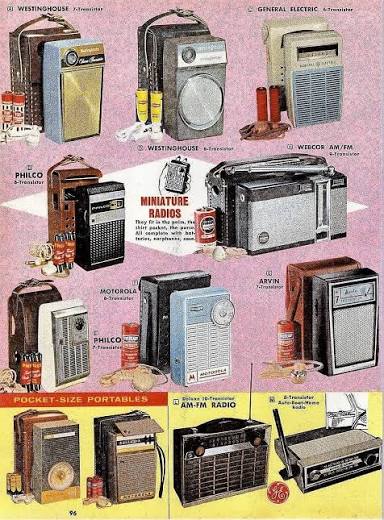
It wasn’t long before the competing sounds of the Top 40 could be heard floating over the hydrangeas into our backyard, as all the neighboring teenagers were glued to their transistor radios in their backyards.
Annoyed, Marvin thought it was nothing short of acoustic warfare as rival AM radio stations vied for attention. Yowsah Yowsah – a veritable blitzkrieg of jive-talking riot of boogity-boogity-shoo– babbling DJ’s whoopin’ and hoppin’ and boppin’ exploding whoa, oh, oh, all -Ah-ah-ah- Americans top 40 hits you want to hear bop-shoo-op.
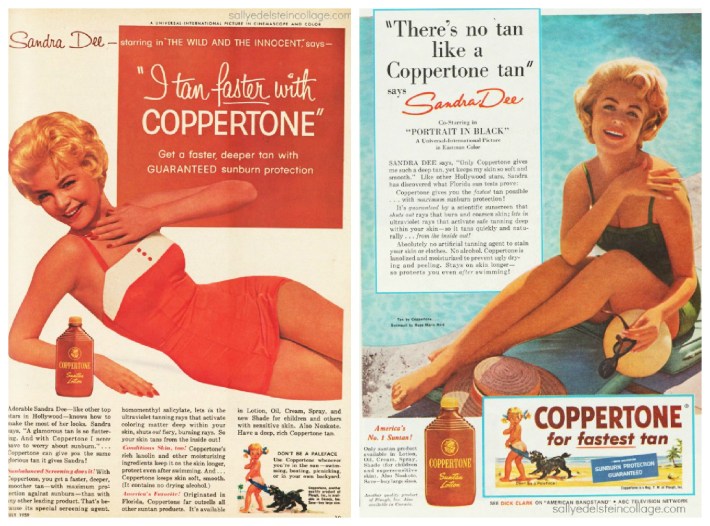
The teens were busy doing their own backyard grilling, which had nothing to do with franks and hamburgers.
Lounging on webbed lawn chairs, they’d be slathering on an oily accelerant like Johnson’s baby oil in hopes of getting a Coppertone tan. Skillfully maneuvering a silver metallic reflector, they hoped to help make those long summer rays burn deeply.
This air assault landed inside the house, too.
While the muted sound of Shelley Fabre plaintively longing for Johnny Angel snuck in through our kitchen screen windows, the honeyed voice of Ella Fitzgerald, courtesy of WNEW’s “Make Believe Ballroom,” filled our house. The cream Bakelite GE table top radio was always on in the kitchen when Betty was cooking.
Burger King

As the Big Band sounds of her teen years filled the kitchen, Betty was busily preparing the hamburgers for the grill, slapping the ground chuck into patties like she was Gene Krupa on the drums.
As head of the barbecue Brigade, Dad was the burger King.
Wielding his Big Boy tongs, his burgers were not the wimpy, buy ‘em by the sackful square cut steamed beneath a blanket of onions or the twoallbeefpattiesspecialsaucelettucecheesepicklesonionsonasesameseedbun kinds of burgers.
Those Golden Arches, the stuff of California dreamin, had yet to embark on their scorched earth campaign across the country.
Dad’s burgers were unwieldy mounds of ground fatty chuck cooked like a cowboy ’round the open fire, tamed with a spatula, then left to sizzle in peace.
Independence Day Speech
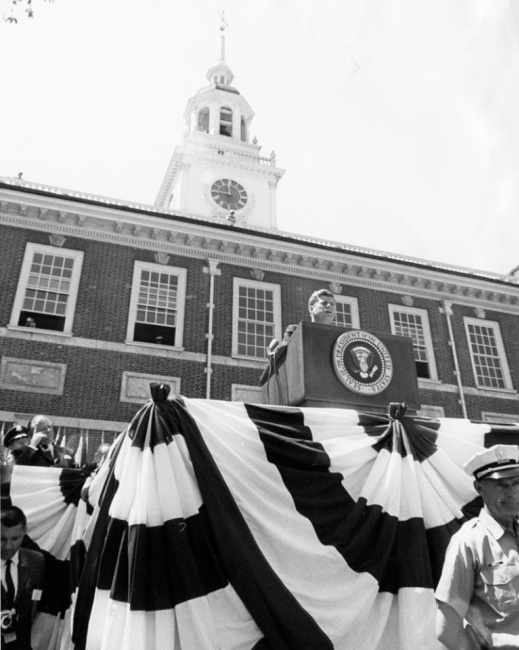
President John Kennedy at Independence Hall, Philadelphia, July 4, 1962
I wandered into the kitchen, grabbing a Dipsy Doodle that lay in a melamine bowl on the Formica counter as Mom finished up the last of the burgers. Suddenly, she looked up at the clock and quickly moved the dial on the radio to CBS News.
In an instant, the warm, smooth voice of Rosemary Clooney was replaced by a now familiar Bostonian one.
Because it was July 4th, President Kennedy was speaking live to the public on the steps of Independence Hall in Philadelphia.
His slightly nasal voice floated from the radio with a calm, educated authority, unmistakably New England; it was a voice that carried authority without raising its volume.
Confidently, he praised the American democratic system, which he said encouraged differences and dissent. He offered inspiration when he spoke of the enduring relevance of the Constitution and the Declaration of Independence. Pausing as he often did to emphasize important ideas, he addressed the beneficial partnership between the U.S. and the emerging unified Europe.
These were American values we cherished.
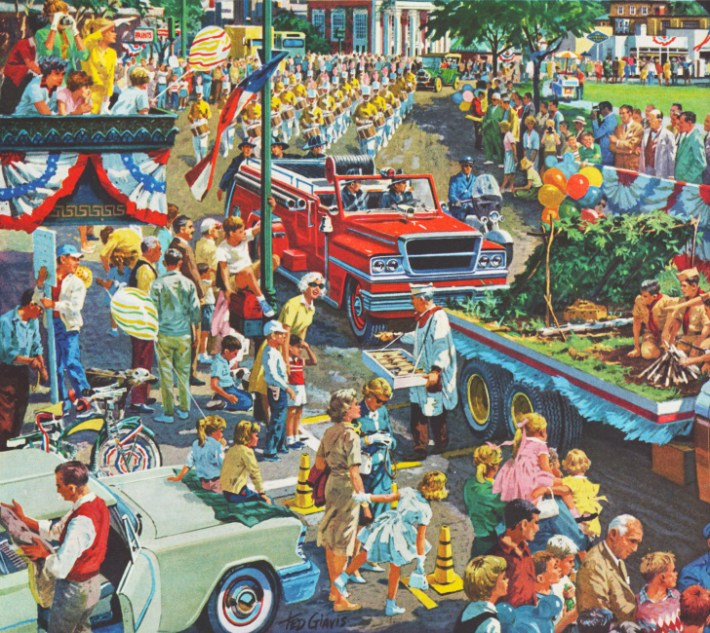
On that sunny, cloudless July 4th, America stood at the height of confidence, waving our flag and celebrating its ideals with genuine pride.
We believed in ourselves.
We believed in our future.
We believed in America.
No country so new and shiny could ever tarnish.
The Photograph That Started The Question
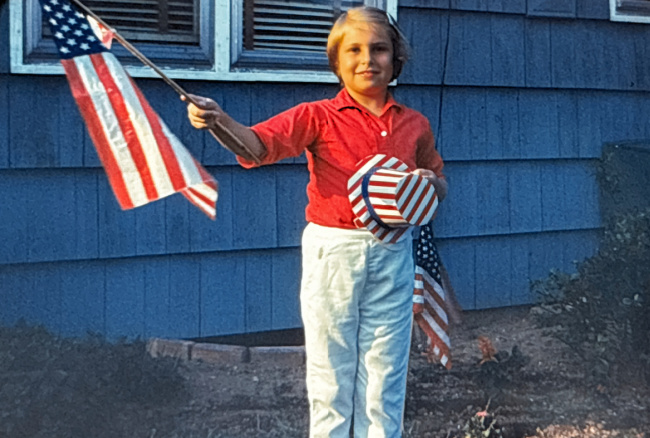
Sally Edelstein, July 4th 1962
Before the company arrived, Mom wanted to make certain that my father took a photo of me decked out in my red, white, and blue stars and stripes.
“Uncle Sam’s niece,” he jokingly called me.
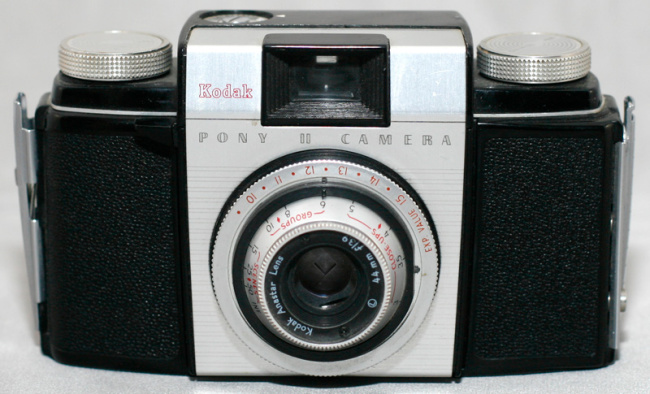
Unlike my own Brownie Starlet camera, Dad’s more sophisticated Kodak Pony could take slides using Kodachrome 25 film, giving pictures rich, saturated color. It also offered an extravagant thirty-six exposures, unlike the measly twelve black and white shots I was used to.
Dad always counted frames, checking the small dial to see how many numbers were left. There was little room for error. Film and processing were expensive, so shots were chosen carefully. Every frame had value.
He would snap just two shots of me, the second one “taken just in case,” both of which we would not see until he finished the roll of film.
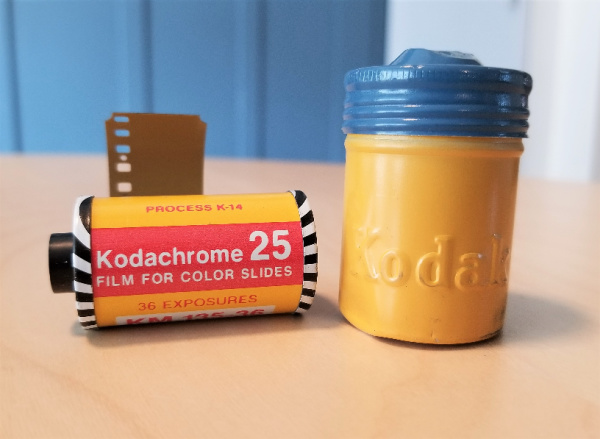
Several seasons could be captured in one tiny roll of film, and, likely, I didn’t see these July 4th pictures until way past Thanksgiving. Which meant, along with photos of my March birthday party and my flag-waving Uncle Sam get-up, the roll of film would include my Halloween outfit that year when I dressed as Nikita Khruschev.
Less than a week after the crisis that brought the world to the very brink of nuclear destruction, my parents thought it a hoot to masquerade their children trick or treating as the culprits of that Cuban Missile Crisis, Soviet Leader Nikita Khrushchev and Cuba’s Fidel Castro. My older brother Andy had first dibs on choosing masks, and he immediately claimed bearded Castro as his own.
Smile
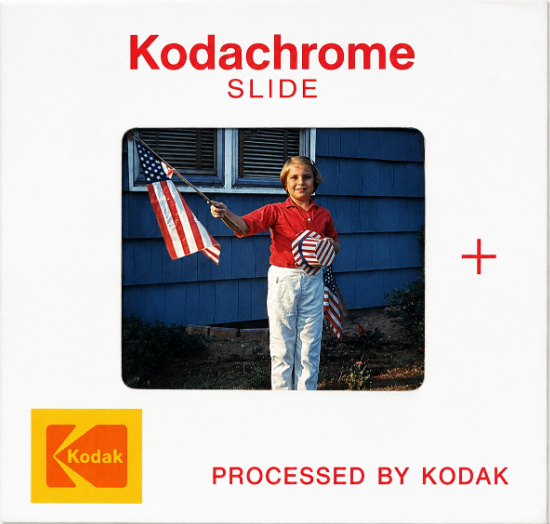
Sally Edelstein, July 4th 1962
I waited patiently as my father adjusted his camera. With slides, there was no negative from which to make a better print later. The slide itself was the finished image. Exposure had to be accurate, and Marvin knew mistakes would be obvious on a projector screen.
Placing the Uncle Sam hat on my head and holding the flag, I stood still in front of my bedroom window, tall and proud of being an American.
“Smile, Sally! Say cheese!”
Click.
Photographs were not just records of life—they were carefully chosen evidence of the life a family wanted to remember. Every click was a decision about what deserved to become memory and, just as importantly, what would remain unseen.
A portrait of a patriot deserved to be seen.
© Sally Edelstein and Envisioning The American Dream, 2026. Unauthorized use and/or duplication of this material without express and written permission from this blog’s author and/or owner is strictly prohibited. Excerpts and links may be used, provided that full and clear credit is given to Sally Edelstein and Envisioning The American Dream with appropriate and specific direction to the original content.


Fabulous time-traveling, Sally. You do
This so well and as is often the case, you give us history that is meaningful today. We’re glad that star-spangled kid is still around.
LikeLiked by 1 person
Thanks, I’m glad you enjoyed the time travel.
LikeLike