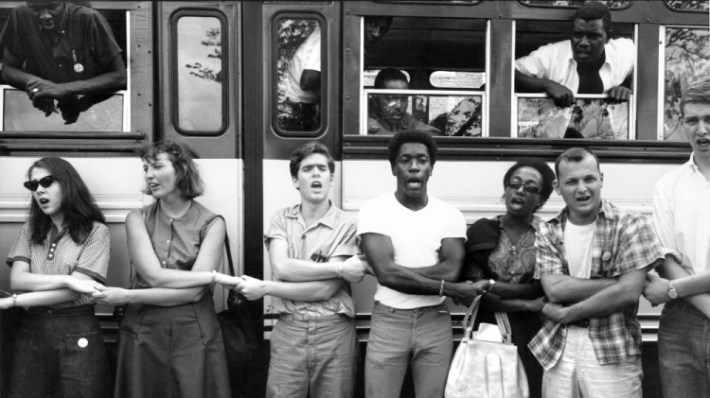
Freedom Summer Activists sing before leaving training for Miss in June 1964 edit: Newseum
Scott Colom’s historic victory in Mississippi takes me back to Freedom Summer, when a nine-year-old at a Long Island day camp learned to sing for justice—and to believe America could change.
The election of Scott Colom in Mississippi is the definition of hope.
For those of us who grew up during the civil rights movement, what just happened in the Deep South is more than profound. It is seismic.
The civil rights movement was the soundtrack of my childhood.
The Soundtrack of Freedom Summer
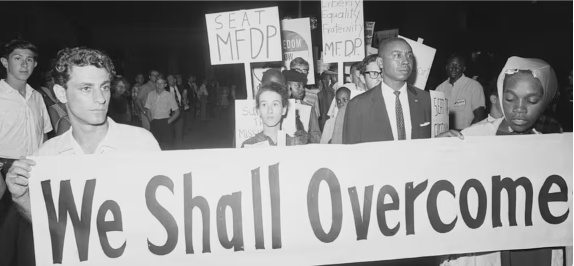
Freedom Summer 1964 When students mobilized for voting rights. Credit Bettmann Archive/Getty Images
In the balmy summer of 1964, known as Freedom Summer, I spent my days as a serious nine-year-old at a New York day camp, earnestly singing folk songs. Linking arms with fellow campers, we belted out “We Shall Overcome,” solemnly dedicating it to the civil rights workers murdered that summer in Mississippi.
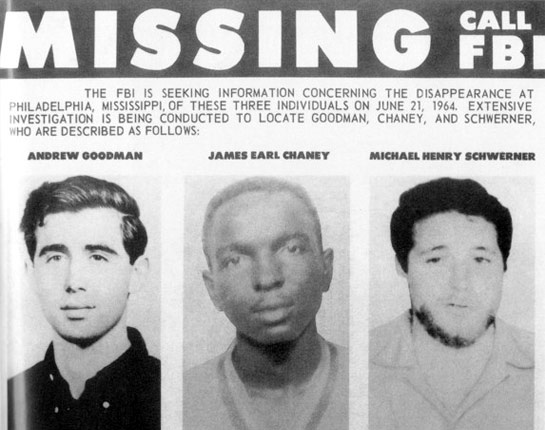
On June 21, 1964, 3 Civil Rights workers, Andrew Goodman, James Chaney and Michael Schwerner, went missing in Mississippi, bringing nationwide attention to Miss. and the Freedom Summer Project. They were discovered killed by the KKK. Credit FBI
Today, as Mississippi prepares to send its first Black senator to Washington since 1881, I remember those young men: James Chaney, Andrew Goodman, and Michael Schwerner. They were working to secure voting rights for Black Mississippians when they were murdered by the Ku Klux Klan.
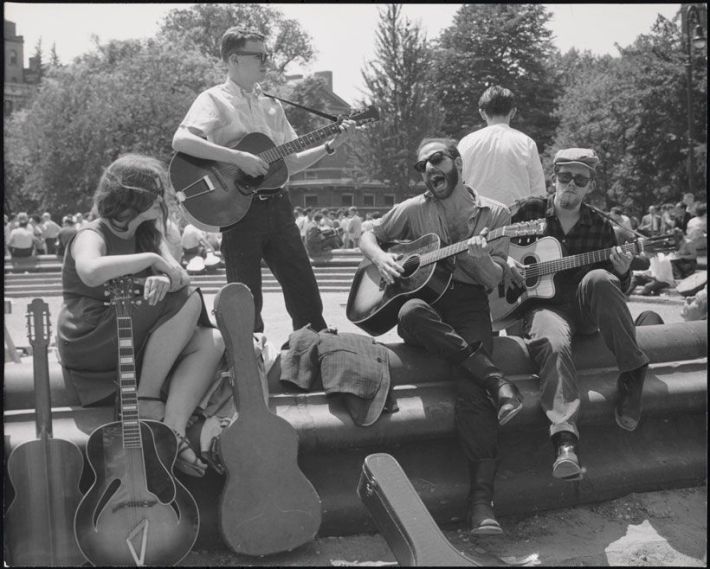
At an oak-shaded day camp in central Long Island, I was led in song by idealistic college students spending their summer working with privileged white suburban children. Perhaps some dreamed of heading to Jackson, Mississippi, to help register voters.
At the time, fewer than 7 percent of eligible Black Mississippians were registered to vote. That summer, volunteers, many of them white college students from the North, joined Black organizers and local residents in a campaign to challenge disenfranchisement and force the country to confront the violence used to sustain it.
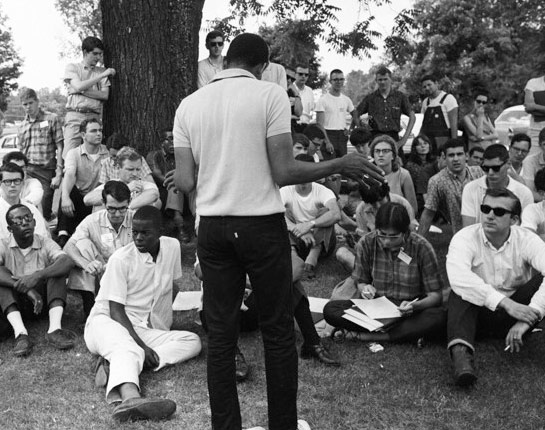
Our counselors may not have joined the volunteers in Mississippi, but they instilled in suburban children like me a sense of social justice that would remain with us for the rest of our lives.
The sound of children singing for justice filled the clapboard recreation hall. It still fills my heart.
We were white suburban children of the Greatest Generation, growing up in split-levels and splanch houses, learning to make good on the promise of democracy our fathers had fought for—and some had died for—only twenty years earlier.
Learning That It Was Our Fight
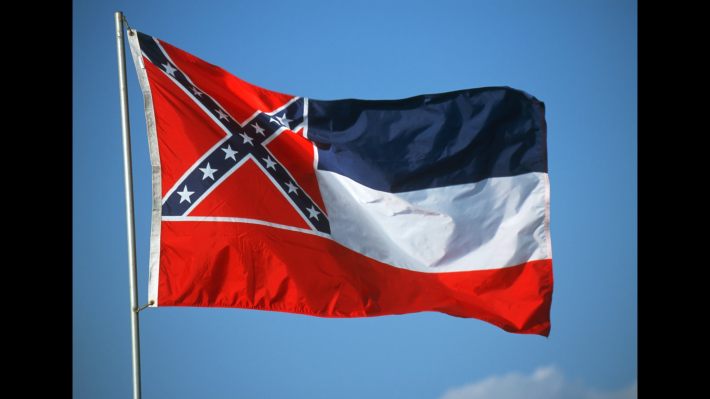
Mississippi Flag still had the Confederate symbol
There was urgency in the air. Justice was long overdue in America. The nation was commemorating the Civil War centennial, yet Confederate flags still flew over the statehouses of South Carolina and Alabama. Mississippi’s official state flag prominently displayed the Confederate battle emblem in its upper left corner.
Camp was the perfect setting for group singing. These were songs we sang together, giving us the feeling that we were all part of something larger than ourselves.
It was our fight.
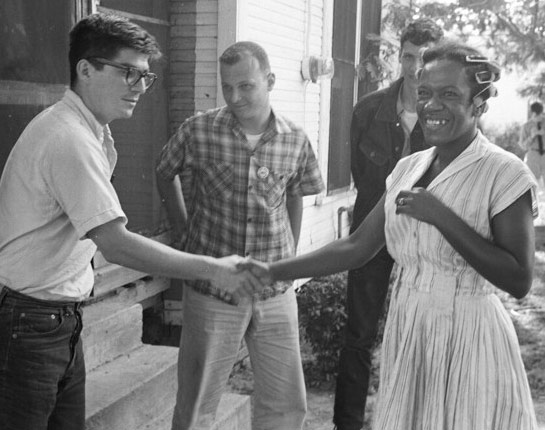
Even as a nine-year-old living in an all-white suburb, I understood that this was our problem. A problem America had to fix.
A few afternoons a week, we gathered in the large, wood-paneled room. Crew-cut counselors in madras plaid shorts and counselors with long, straight Mary Travers hair channeled Pete Seeger, patiently teaching us “Kumbaya,” “Where Have All the Flowers Gone,” and “If I Had a Hammer.”
For children who could not travel South or join a sit-in, singing offered a way to participate, however indirectly, in the civil rights movement. The songs gave words to a sense of injustice we were only beginning to understand.
Accompanied by an upright piano, we sang “This Little Light of Mine” with all the sincerity our nine-year-old hearts could muster. Far from our safe suburban camp, demonstrators sang that same song while facing arrest, police batons, and violence.
We were learning that a voice could be an instrument of resistance. That raised together, our voices might carry farther.
Singing was a unifying affirmation, contagious in its power to push back against injustice.
A Promise We Are Still Learning to Keep
The sessions always ended the same way. Our leader asked us to take one another’s hands, forming a single chain, and we sang “This Land Is Your Land.”
Holding hands in that recreation hall, I felt more patriotic than I did singing “The Star-Spangled Banner” at school each morning.
“This land was made for you and me.”
I was nine. I could not have imagined how long the struggle would last, or how often the promise in those words would be betrayed.
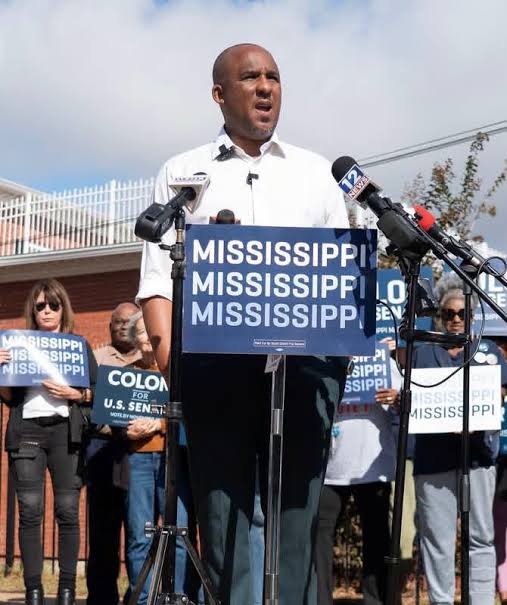
Scott Colom
Scott Colom’s election does not mean that struggle is over. But in a state where people were murdered for helping Black Americans register to vote, this victory carries the weight of history—and the possibility of change.
More than sixty years later, I can still hear our young voices filling that room.
After this election, the promise we sang about feels a little closer to being kept.
© Sally Edelstein and Envisioning The American Dream, 2026. Unauthorized use and/or duplication of this material without express and written permission from this blog’s author and/or owner is strictly prohibited. Excerpts and links may be used, provided that full and clear credit is given to Sally Edelstein and Envisioning The American Dream with appropriate and specific direction to the original content.