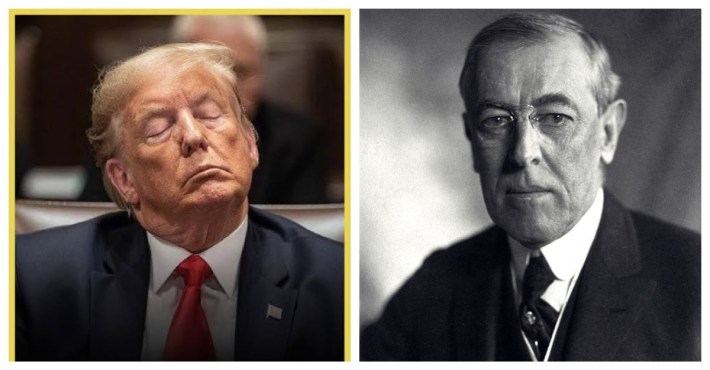
When the White House Hides the President: From Wilson to Trump
Where is Donald Trump? Where is our President?
Trump has not been seen publicly since Wednesday, November 11. During a national crisis, our president made no televised or public statement on the FAA ground stop on November 13. All that exists are sketchy rants from his Truth Social account, likely written by his aides.
The Public Deserves More Than Posts

A reassuring post from Trump’s Truth Social Accout November 15
Our media has somehow decided it’s not a story to report on the real mental and physical health of a sitting president (or a sitting member of Congress, for that matter). They are enabling an unfit person to run the country, and we may not even be told when he dies
Whatever the cause of Trump’s physical and mental frailties and visible ailments, Trump would not be the first president to keep a health condition secret from the public
Trump’s apparent mental and physical decline and mysterious disappearance during a major crises have fueled intense political speculation, conspiracy theories, and demands for transparency
Donald Trump claims his doctor claims he’s the specimen of excellent health. His sagging, tired, faltering, swollen cankles, and unwell appearance point otherwise. Whatever the cause of his visible ailments, Trump is not the first president to keep a health condition secret from the public
Cue Woodrow Wilson
In 1919, President Woodrow Wilson suffered a major stroke.
The president, a widower, was kept in solitude by his second wife Edith and a tight ring of advisers. For months, senior executive branch and legislative officials could not see the president. The White House claimed the president would shortly return to full health, and that he suffered only from “nervous exhaustion.”
A First Lady Becomes the Gatekeeper
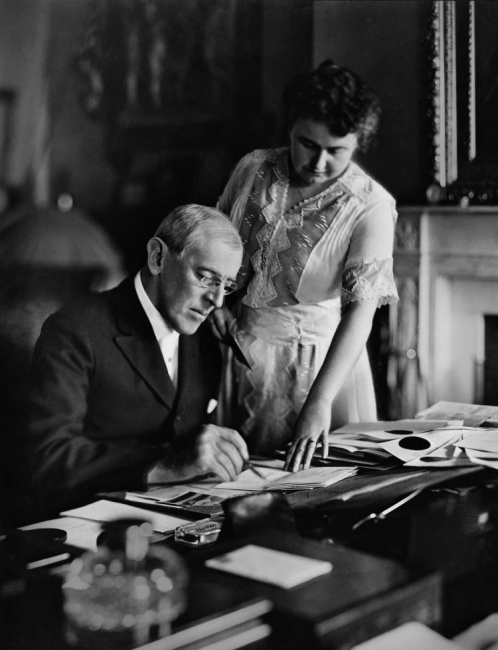
President Woodrow Wilson and his wife Edith Wilson
His wife managed the flow of information to him, sharing certain memos and concealing others. Fearing resignation would destroy his recovery and political legacy, First Lady Edith Wilson, his physician, and top aides concealed the severity of his condition, effectively acting as “steward” and running the executive branch
The president was desperate to cement his legacy and did not consider resigning. In fact, he felt confident he could run for another term despite his acute medical condition.
In an open convention, the Democratic Party took 44 ballots to choose his successor. In the subsequent general election, Warren Harding won with the largest popular vote margin ever for a Republican candidate.
Secrecy Breeds Distrust
In both eras, secrecy breeds distrust.
The technology has changed; the underlying question has not:
Can a democracy function when citizens cannot confidently judge whether their leaders are capable of governing?
© Sally Edelstein and Envisioning The American Dream, 2026. Unauthorized use and/or duplication of this material without express and written permission from this blog’s author and/or owner is strictly prohibited. Excerpts and links may be used, provided that full and clear credit is given to Sally Edelstein and Envisioning The American Dream with appropriate and specific direction to the original content.